

#2- Women Entrepreneur series
How many times have we searched for templates on Canva to finish a school project or to design something? I know I’ve used it multiple times and it’s saved me too many times🤭. We’ve got Melanie Perkins to thank for that.
Melanie Perkins is the co-founder and CEO of Canva. She’s one of the youngest female CEO’s of a tech start up. She is also among the richest women in Australia. Forbes has included her in their 30 under 30 list. All of this at just 32 years old!
She first got the idea when she was 19. She used to teach students as a way to earn some money. While teaching them, she realised the students were struggling with platforms like Microsoft and Adobe. Resizing them, exporting the files, transferring them etc. was really cumbersome. This was back in 2006 so the internet wasn’t as good as we have it. She thought to herself, “there must be some better way.”
Turns out there wasn’t. Melanie came up with a vision and planned on implementing it with her boyfriend, Obrecht.
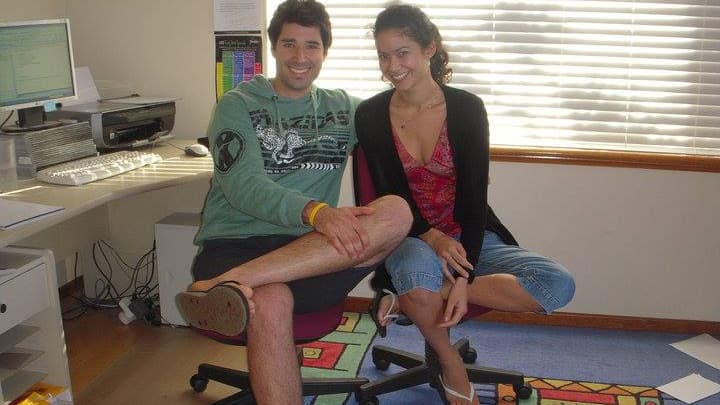
They started small. Their little business is called “Fusion Books.” It was an online school yearbook design business. Their customers could create their design on the online portal and the couple would print it and distribute it to the school. It was a huge success in Australia and the company still exists. It’s now the largest school yearbook publisher in Australia and has expanded to France and New Zealand.
She had a meeting with Silicon Valley investor, Bill Tai at a Perth conference. And when they hit it off, she had a meeting with him at a café. This led to an introduction to Lars Rasmussen, the co-founder of Google Maps who went on to become their tech advisor. Finding an investor wasn’t easy for Melanie and her now-fiancée Cliff Obrecht. They continued to chase connections. Finally, they met Cameron Adams, an ex-Googler who founded a start-up based in Sydney. He was supposed to be their advisor, but he ended up signing as the third cofounder.

At this point. they even had a technical leader. So they decided to break ground. Canva raised $3 million in seed funding in two tranches in 2012 and early 2013, including a crucial matching grant from the Australian government.
Melanie had a vision. Canva’s timing was actually perfect. With the rise of social media like Instagram and Twitter, businesses were changing how to reach their customers. Everyone, not just companies, wanted to create an online presence that was impactful and looked aesthetic. Since Canva was either free or affordable, it helped them to make posts that look good in an easy way. She achieved her aim of having all the resources for digital designing in one place. She came up with a unique idea, and just what people were looking for. She saw potential in her idea as did Cameron and Cliff.
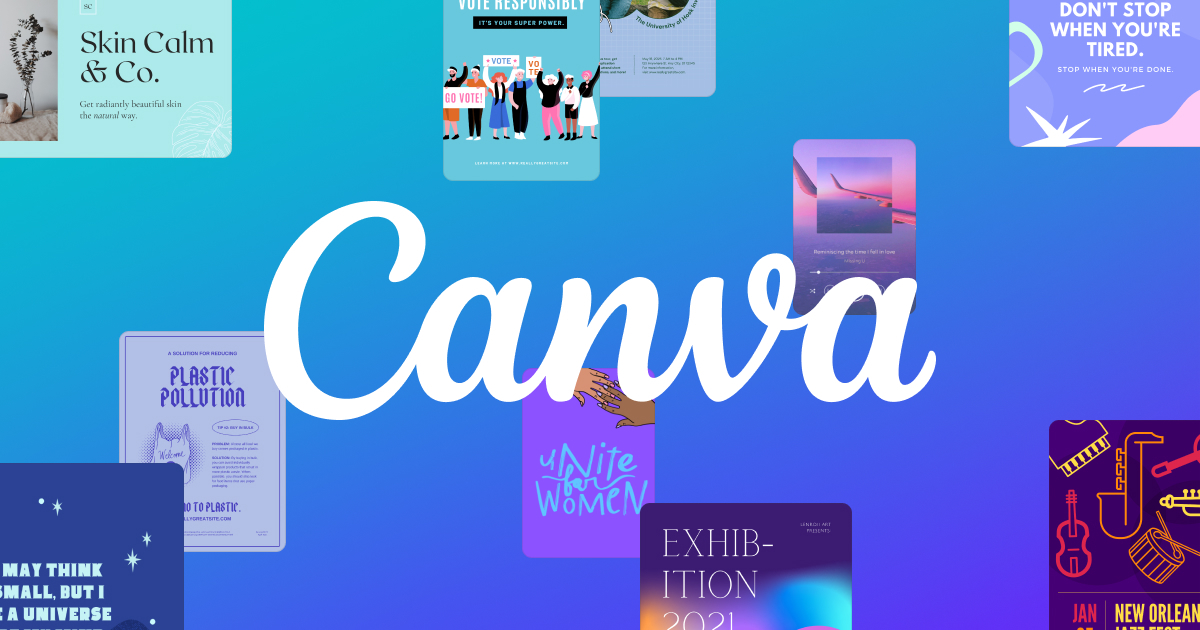
Canva has a competitive edge as many of its features are free. Obviously, for premium access you have to pay. They have also introduced the feature of collaborative editing, which means you can share a Canva project with others and you can work on it at the same time and see the edits your co-workers/ partners are making simultaneously.
Now Canva is a unicorn, valued at $6 BILLION! It’s the largest unicorn in Australia. The platform now has over 30 million monthly active users across 190 countries, who have collectively made over 3 billion designs to date. It’s a profitable tech startup (now that’s rare). In the first half of 2017, they made a net profit of $1.86 million on a revenue of $25.1 million.
One of the reasons Canva is so successful could be because, as Melanie mentioned in an interview, one of their values is to ‘set crazy big goals and make them happen.’





 The Echo-nomist
Leave a comment