

Shopping! Now that’s something everyone likes, or relates to at least…
.gif)
Fashion during COVID
Many of us have been attending zoom calls since March 2020. Soon I learnt that we didn’t need to wear formal clothes and get ready in the morning for school. I’d just put on a nice top, do my hair and wash my face and I was ready for school. I could wear shorts or whatever I wanted and no one would ever know.
India was under lockdown for around 3 months, starting March end. Human interactions were at an all time low. Slowly things started getting back to normal, shops and offices were opening up. But a lot of people were still not sure to go out. After all, the virus was still there. And now, after things had gotten fairly close to normal, we were hit with the bigger, stronger, more virulent wave. So it’s safe to say that people haven’t been in the habit of going out since Covid first began.
This has drastically changed things. Since people are sitting at home all day, many of them are going for comfortable clothes. Also, as we sit at home and scroll through TikTok and Instagram Reels, many are trying to stay in touch with the new trends.
Marks and Spencer’s reports, “consumer spend was concentrated on different categories reflecting life at home and changing behaviours, such as loungewear, babywear, and bedding products, and away from formal and suiting.” They also mentioned that they can see a consumer shift towards casual dressing.
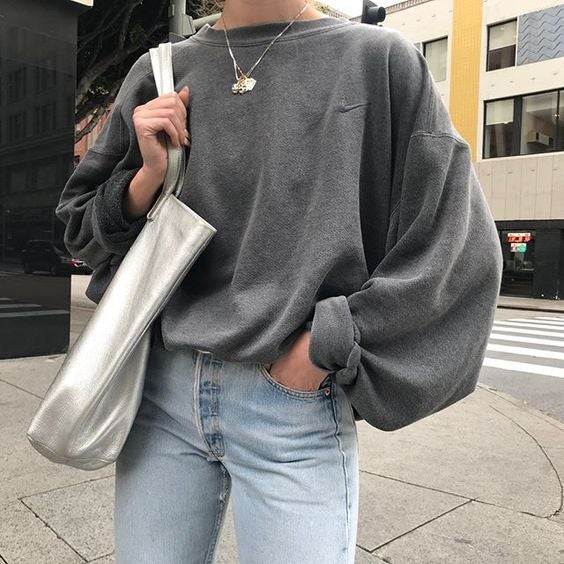
This is why, we have seen as increase in loungewear. There has been a return to oversized sweaters, tight fitted tops, wide leg pants, joggers, vintage aesthetics etc. People have been adding tights, track pants, and breathable clothes to their closet.
This is why there was an increase in sales for the clothes under the above mentioned category. Levi’s reported a growth from 11% of total revenue to 21% of total revenue for tops in 2020. They also observed the move towards casualization in a pandemic stricken year. In its annual reports, Kering mentioned that they noticed two trends in 2020: (i) the popularity of streetwear among younger generations and (ii) the difficulties met by the most formal clothing segment.
Can you observe a pattern in what kind of clothes people are looking for?
E-commerce for clothing brands
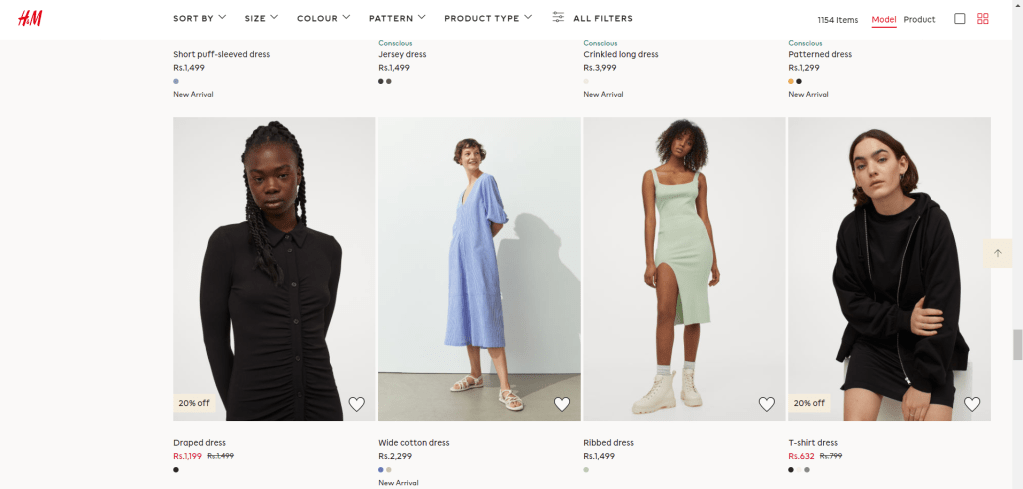
Clearly, there have been drastic changes in what a customer wants to buy now a days. There has also been a change in how a customer wants to shop.
When all you can see is the virus on surfaces around you, e-commerce is the way. When the pandemic was at its peak, most of the clothing stores remained shut. In order to keep their business going, many companies focused on improving the online shopping experience for customers. They looked at it as a new business opportunity.
Considering how popular e-commerce has become, customers seem to have adapted to this change. In some ways, it’s more beneficial for them. They have the luxury to sit at their home, scroll through a lot of styles (more than they could’ve in a store), at any time which is convenient for them.
The most popular clothing and fashion brands have announced huge increases in sales from digital platforms. From Levi’s reporting a 29% growth in e-commerce, to Phillips-Van Heusen Corp.’s (PVH’s) 43% growth for digital channels. Kering’s online sales of luxury goods was up by 50%, which is the equivalent of five years of growth. Nike had a strong digital commerce sales growth of 49%. H&M group’s online sales increased by 38% for the financial year, in local currencies.
Profit Margin in 2020
What’s interesting to see is that, while Levi’s Strauss and Co.’s revenue was down $1.5 billion (25.86% YoY), their adjusted free cash flow increased $25 million (21.55% YoY). Their adjusted gross margin also increased 0.8%.
Free cash flow represents the cash available for the company to repay creditors, or pay dividends and interests to investors. And adjusted gross margin is used to determine the profitability of a product, product line or company.
The reason for this could be that the shift to online has reduced operating expenses and hence increasing their profit margin. Adidas also noted this trend. Their marketing and point-of-sale expenses decreased 13% and their operating expenses were down 7% in Q4. These figures were more pronounced in the fourth quarter according to them, as the sales picked up.
The question is, will they be able to carry this to 2021 and future years?
The way ahead
2021 has a lot in store for clothing and fashion brands. Because some things never go out of style. And everyone needs clothes.
Online may be the way for clothing brands, as H&M revealed in 2021, they plan on closing 350 stores and open just over 100 new stores. They will have a net decrease of 250 stores! Another thing they’re focusing on is increased digital investments and further integration of online and physical stores. PVH’s plans for 2021 include reduction in its workforce and reducing its real estate footprints, including reduction in office space and select store closure.
The pandemic has surely helped in realising the limitless world of e-commerce and aided the switch from traditional stores to online stores. Brands are trying to utilize this potential to their advantage and this is only the beginning.








 The Echo-nomist
Leave a comment