

On May 25th, social media was buzzing with speculations that social apps like WhatsApp, Instagram and, of course, Twitter were going to be banned in India. When people logged into these apps at 12:00 am, they were still there and functioning perfectly fine!
The thing is, the government has some new IT rules. On February 25th, the Centre released new IT rules related to OTT and social media platforms. They were given 3 months to comply with these rules, which ended on 25th May. While Facebook and Google agreed to follow them, others didn’t…
What were the new rules though?
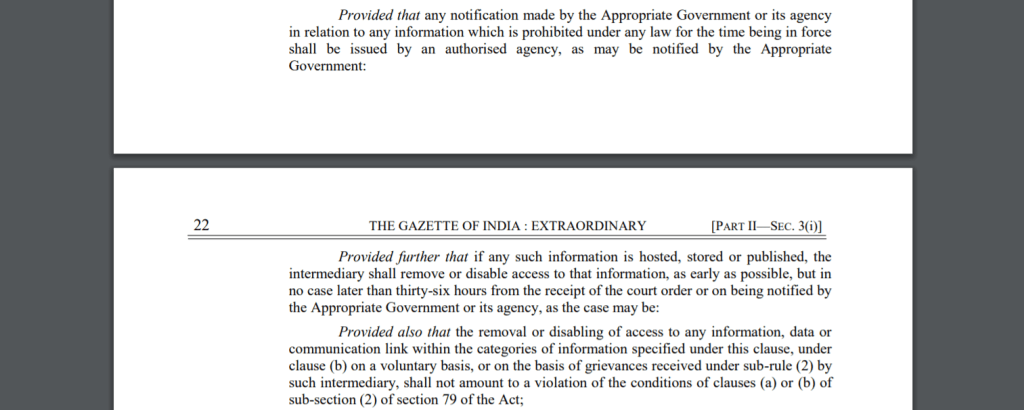
According to these new rules, platforms with more than 5 million users are required to have a chief compliance office, a nodal contact person and a grievance officer – all three of whom are required to be Indian residents. They also stated that social media platforms were bound under the law to remove any flagged content, no later than 36 hours from being notified by the Appropriate Government or its agency.
Wait, there’s more! Social media companies will be required to disclose the first originator of some information on their platform, as may be required by a judicial order passed by the court. However, it shall only be passed for the purposes of prevention, detection, investigation and some other offences.
This is where WhatsApp clashes with the government.
The rules say that they just need the first originator. In fact, it even explicitly mentions that they don’t need to disclose the details of any electronic message or any other information related to the first originator or any of its users. Mark said, fair enough but we can’t do that even if we wanted to.
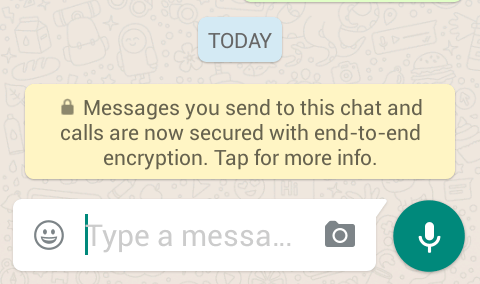
WhatsApp is unique from different messaging apps because of its end-to-end encryption. This means that only the people sending the message and receiving the message can see it. It’s coded in such a way that no one in between can see it, not even WhatsApp. Even the police cannot intercept these calls during transmission.
Seems like the perfect platform to plan a robbery or an attack. Which is exactly why the government wants the originator.
Anyway, WhatsApp is saying that there is only one way to find the originator of any message- break end-to-end encryption all together. In a statement, WhatsApp said “Requiring messaging apps to ‘trace’ chats is the equivalent of asking us to keep a fingerprint of every single message sent on WhatsApp, which would break end-to-end encryption and fundamentally undermines people’s right to privacy,” This goes against their policy.
WhatsApp did what Facebook knows best- litigation.
They sued the Indian government on Wednesday to stop “oppressive new internet rules.” The lawsuit, filed in the Delhi High Court, seeks to block the enforceability of the rules and called them unconstitutional. They mentioned that tracing the origin of a message cannot be implemented in a foolproof way and would be highly susceptible to abuse.
WhatsApp can’t stand to lose as India is their largest market in terms of users, with more than 400 million active users.
How are other social media players handling this?

Google was nothing short of supportive. In a virtual conference with reporters from Asia Pacific, CEO Sundar Pichai said “we always respect local laws in every country we operate in and we work constructively,” He added that they have clear transparency reports, which can be produced if the government asks for it.
Facebook wasn’t a tough egg to crack either. ET reports that Facebook has said they aim to comply with the provisions of the IT rules and continue to discuss a few of the issues that need more engagement with the government.
Twitter’s rival, Koo reported that they provided the “necessary details” on compliance with the new social media rules. They added that getting information on who said what first is a pretty open and transparent exercise in the app. Their intent is to ensure every user has a safe experience on their platform, according to their statement.
Twitter’s bird is just hovering over the government. On Thursday, the Centre said that Twitter needs to stop beating around the bush and comply with the laws of the land.

Twitter and the government have some beef. Twitter wasn’t afraid to hold back their views on the new rules and expressed their concern about the potential threat to freedom of expression as these new rules came into effect. They said, “we will continue to be strictly guided by a commitment to empowering every voice on the service and protecting freedom of expression and privacy under the rule of law.”
The government responded by saying, “law making and policy formulations is the sole prerogative of the sovereign, and Twitter is just a social media platform, and it has no locus in dictating what India’s legal policy framework should be.”
It will be interesting to see the series of events unfold as WhatsApp and Twitter retaliate against this law. How desperately does the government want these laws implemented and how far will they go?





 The Echo-nomist
Leave a comment