

India has been hit with high prices of oils. Edible oils are at their highest point in over 10 years and petrol prices crossed the ₹100/ litre mark in Mumbai. But today we’re going to talk about the skyrocketing edible oil prices.
I don’t know about crypto, but edible oil prices are definitely going to the moon.
The most used edible oils in India are- groundnut oil, mustard oil, Vanaspati, soya oil, sunflower oil and palm oil. And the prices of these oils have been on the rise since January 2020. They have risen between 20% to 56% at all-India levels in the last one year.
India’s requirement for edible oils is approximately 14.5 million tonnes, out of which 65% is met by imports. Global prices of oil are rising, and so it’s affecting prices in India. Now they are facing the consequence depending so much on imports.
Palm Oil

Indonesia is the largest producer of palm oil in the world, followed by Malaysia at second place. Both these countries have received the B30 and B20 biofuel mandates. The B30 mandate stipulates that diesel in Indonesia contain 30% palm oil derivative. And the B20 biofuel is a common biofuel blend that contains 20% plant/animal based fuel and 80% petroleum diesel. These mandates were issued to reduce the carbon footprints by these countries. This increased the amount of vegetables oils mixed in fuel.
Hence these countries have an increased local consumption, which is met by reducing the amount of exports. Almost all of India’s palm oil requirement is met by imports from Indonesia and Malaysia. So India’s demand hasn’t fallen, but the imports have which has led to prices shooting up.
Soybean Oil
The weather has been persistently dry in Argentine and Brazil resulting in bad crops and low produce of soybeans. India imports 85% of its soybean oil from Argentina and Brazil. There’s another contributing factor- higher demand from consumers like India and China. According to the Soybean Processors Association of India (SOPA), shipments were at 14.35 lakh tonne during the period, against 3.65 lakh tonne in the same period last year. The rise in global demand has led to a price rise in soybean to ₹1500 per quintal from the minimum support price (MSP).
Sunflower Oil

90% of India’s sunflower oil needs are met by imports from Russia and Ukraine. But due to the outbreak of COVID-19, sunflower production was hit hard. The crop didn’t do well and hence they have had to cut down on imports. The prices have been steadily rising and it is directly impacting consumers as it’s commonly used for cooking.
Mustard Oil
Remember these yellow fields from DDLJ? Those mustard fields are probably not that yellow right now. Their crop was impacted due to lockdowns and hence the produce wasn’t enough to meet the demand. Which, again, lead to a price rise.
The retail price of mustard has increased 44% to ₹171 per kg on 28th May’21, from ₹118 per kg exactly one year ago. Prices of palm surged from ₹85 to ₹138 and Sunflower Oil from ₹110 to ₹175. Palm oil, which is widely used in India, rose from ₹85 per kg to ₹138 per kg.
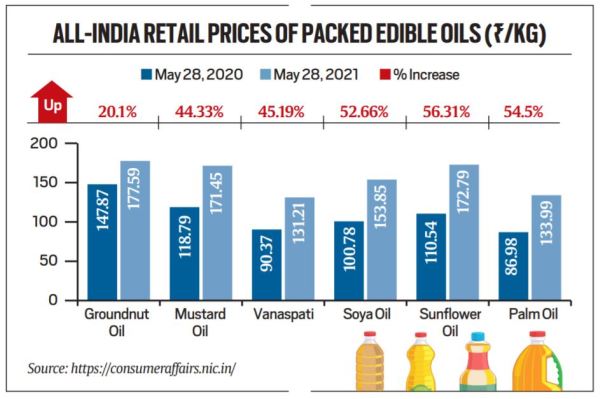
As a result of this, the retail prices of oil have risen. Customers are not happy about this… One consumer said that Saffola has become very expensive. Their five litre can, which used to cost ₹935 now costs ₹1,138.
Wholesale prices of edible oil manufacturers like Hindustan Unilever, Tata Consumer Products, ITC etc. have been impacted as palm oil is a significant ingredient.
This might also result in an upsurge of prices of products, whose main ingredients consist of an edible oil. However, companies don’t want to pass on this rise to consumers so soon due to the market sentiment during Covid. If these prices persist, companies will have to take the decision to bear the cost or increase the prices.

On a brighter note, the prices are likely to fall in the second half of OY21 (Oil year 21 refers to the period from Nov’20 to Oct’21). Hetal Gandhi of CRISIL research said, “We expect a gradual drop in prices in second half of OY21 as the global supply normalizes, however, the prices will still remain higher as compared to OY20.”
We’re going to have to wait for a few months to see if this prediction is right. In the meantime, we can hope that companies don’t want to hurt the consumer sentiment too much.





 The Echo-nomist
Leave a comment