

In 2017, Salvator Mundi, a painting by the famous Leonardo Da Vinci, was purchased by Saudi Prince Mohammed bin Salman for over $450million, making it the most expensive art sale by auction in history.

$450million dollars is a massive amount of money, and if invested wisely, it has the potential to give massive returns. You can invest in growing companies, real estate, start ups, new technologies, cryptocurrency, even buy an entire island if you’d like to. A painting, on the other hand, can do scarcely more than hang on a wall and look pretty. So what exactly makes art worth such a lofty amount of wealth?
Art is generally bought and sold for two main purposes – consumption and investment.

Consumption
The value of art can be difficult to measure because its aesthetic appeal and the emotion it evokes can never be quantified. For those who purchase art for consumption, the returns are not financial. However, that does not mean they don’t exist. Economists refer to this as “psychic returns”.
These psychic benefits include the satisfaction of supporting art and artists as well as the appeal derived from the functional (decorative) aspect of art pieces. More importantly, however, possessing art is often a symbol of prestige as it displays good taste, wealth and power. Economists refer to this phenomenon as “conspicuous consumption” – the purchase of lavish items as means to enhance one’s prestige.

Investment
The performance of art as an investment varies widely depending on a series of factors. For instance, works associated with art movements that are currently fashionable tend to outperform other types of art. And it is typically the works of leading artists that are in high demand.
Investment in treasure assets such as art are often speculative in nature. The intrinsic value of art tends to remain the same over time, implying that those who invest in it for the purpose of financial gain base their decision more on conjecture rather than knowledge.
Investment in art is often based on the Greater Fool Theory. In finance and economics, this theory states that you can make money from buying overvalued securities because there will usually be someone (i.e. a greater fool) who will be willing to pay an even higher price.
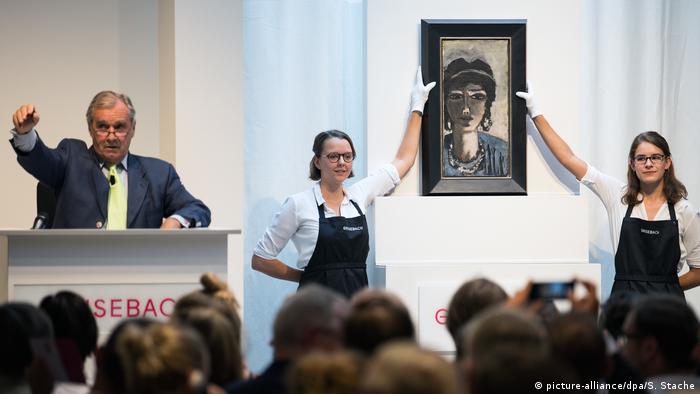
(It’s interesting to note that some of the wealthiest people in the world make important investment decisions based on this theory. Ironically enough, by its very name, this theory calls anyone who prescribes to it a fool!)
Art Prices
At the upper echelons of the art market, the industry is notorious for outrageous prices. People spend millions of dollars to obtain what is essentially just strokes of paint on a canvas. The real question is – what makes some art so damn expensive?
It’s important to note that the financial value of any artwork is never determined by its actual beauty or the skill of the artist. Those factors are entirely subjective. You might think the Mona Lisa isn’t nearly as impressive as the graffiti on your school desk, but that won’t change how much either of those works cost.
(Likewise, I would recommend that you don’t waste precious minutes of your life trying to comprehend why anyone would ever pay to own a Jackson Pollock painting. The whims of the wealthy are not for us common folk to understand.)

On the face of it, the art market seems like a peculiar economic anomaly. However, like any other commodity, the price of art is subject to the same laws of supply and demand as the rest of the world.
The cultural significance, the prestige offered by its ownership, and the prospects of future financial gain are all factors that contribute to high demand. The rareness and uniqueness of these art pieces not only restrict the supply, but also fuel demand for these works.
Low supply and high demand interact in a curious mix of investment and consumption, and cook up the perfect recipe to drive up prices. Moreover, many of the buyers are so wealthy that the art they try to procure becomes almost price inelastic.

Art can be strange and difficult to understand, but sometimes, its prices can be even more so. Its place in society is such that even centuries after the death of the original artists, their work commands the movement of money in ways that even entire corporations cannot.




 The Echo-nomist
Leave a comment