
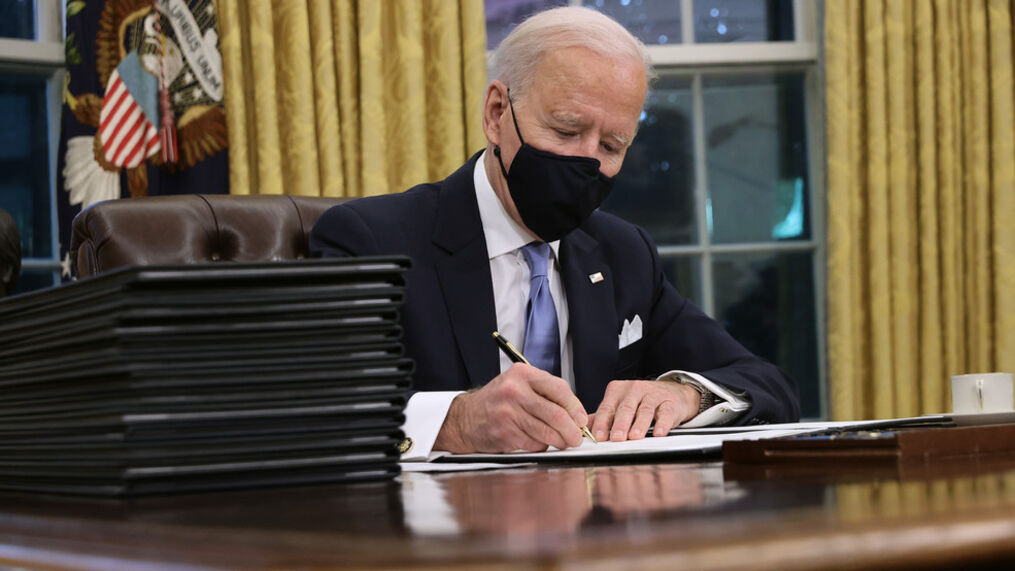
“Capitalism without competition isn’t capitalism, it’s exploitation,” wise words by American President, Joe Biden.
On July 9th, Joe Biden addressed a small crowd in the state dining room at The White House. He talked about open and fair competition in the heart of American capitalism, and was about to sign an executive order to promote competition among U.S. businesses. And that’s when he said these wise words, which have since then gone viral.
The executive order that he signed is an aggressive enforcement of the antitrust laws. Antitrust can be defined as prevention of monopolies, and so promoting fair competition in business. Their aim is to tackle concentration of corporate power in several sectors.
Like the triopoly in digital advertisement by Facebook, Google, Amazon or the monopoly in US tech world by Apple, Amazon etc. or Airbus and Boeing in airline manufacturers or Verizon and AT&T in Internet service providers or Google’s search monopoly. The examples are endless. Biden’s aim is to end this concentration of power in the hand of a few corporate groups because it restricts the entry of the new firms. New firms are mostly either bought by the bigger firms in that industry or fail to survive because they don’t have the power or influence to fight these bigger monopolies. The executive order wants these small businesses to stand a chance.
/cdn.vox-cdn.com/uploads/chorus_asset/file/19727914/Monopoly_3_03_lines.jpg)
While it is good for new business, the subject matter of this order also includes more scrutiny of Big Tech and a reduction in the high fees charged by the ocean shippers.
How are they doing this? They mentioned a few ways actually- re-examining problematic mergers, pushing for rules against excessive surveillance by corporates, prevention of unfair termination gees from internet service providers and “right to repair” laws.
Let’s break this down.
Problematic mergers throw a light on acquisition of nascent competitors (those which could be considered significant competitors at some point), serial mergers, accumulation of data, competition by “free” products and effect on user privacy. Interestingly, it could affect mergers that were initially approved but are facing renewed scrutiny from US Federal Trade Commission (FTC). Think: Facebook acquiring Instagram and WhatsApp. During a prior investigation, it was found that fb competes more vigorously among its own products- Facebook, Instagram, WhatsApp and Messenger- than with actual competitors!

The order states “many of the large platforms’ business models have depended on the accumulation of extraordinarily amounts of sensitive personal information and related data.” Thus they reached the conclusion that FTC will establish rules on accumulation of such data.
Unfair competition- large platforms’ powers gives them unfair opportunities and small businesses have to rely on services of these large platforms. For example: companies with dominant online marketplaces observe how small businesses’ products sell and use this data to launch their own similar products. And because it’s their own platform, they can list their products more prominently than those of small businesses. And to prevent this, the order encourages FTC to establish rules barring unfair methods on competition on internet marketplaces.
All of this is kind of aimed at Big Tech and being referred to as a “crackdown on Big Tech.” But that’s not the only sector that’s being talked about in the order. They’ve also included industries- some of them being healthcare, internet services, agriculture, transportation, labour markets etc.
For labour markers the government aims to increase in wages and employee benefits, ban unnecessary occupational licensing restrictions, prevent suppressed wages and more.
People seem to have mixed opinions about this. Some people are critical because of the scrutiny faced by big tech, and stricter rules for merging and acquisitions. However, some people are looking at this as a positive change. Among other things, they will result in concrete improvements in people’s lives. Like making it easier to change jobs, raise wages, lower prescription drug prices, allowing hearing aids to be sold as OTT at drug stores (it will save customers thousands of dollars), reduce internet bills, easier airline refunds, empower farmers, increased opportunities for small and upcoming businesses.
Does competition work? Theoretically, yes. It will induce the firms to compete with each other and provide better and more attractive goods and services to consumers. In order to compete, they will focus on quality and the prices will reduce when there is more competition. It will help the firm and the economy grow. Practically, it depends on the competition.

Biden seems pretty optimistic that competition works= “Fair competition is was what made America the wealthiest, most innovative nation in history. That’s why people come here to invent things and start new businesses.” Focus on the word fair. It all comes down to how this executive order is implemented.



 The Echo-nomist
Leave a comment