

Robinhood debuted on Nasdaq on 29th July 2021 with a valuation of $32 billion after raising some $2.1 billion. As of the end of June, the firm had 22.5 million funded accounts and its users held about $100 billion of assets on the Robinhood platform (source: Robinhood’s Prospectus). Their first day of trading didn’t go as expected. They wanted to ensure a pop for retail investors, but that backfired. Let’s start from the beginning.
It was one of the first apps for retail investors to trade freely. Let’s just say their entry wasn’t marked with appreciation and appraisal. Instead, it was met with comments like- “terrible idea,” “isn’t a completely great thing,” “they are just doing stupid things,” “this is a bad business” and more.
Ouch.
Robinhood changed the industry, not because of free trading, but because of the “gamification” of investors. They promote retail investors to spend money by push notifications and other prompts and offers. Critics say, since it’s so easy for people to invest, people think of it more like a gambling game, hence ruining the whole idea of investing after studying the market, analysing the trends etc.
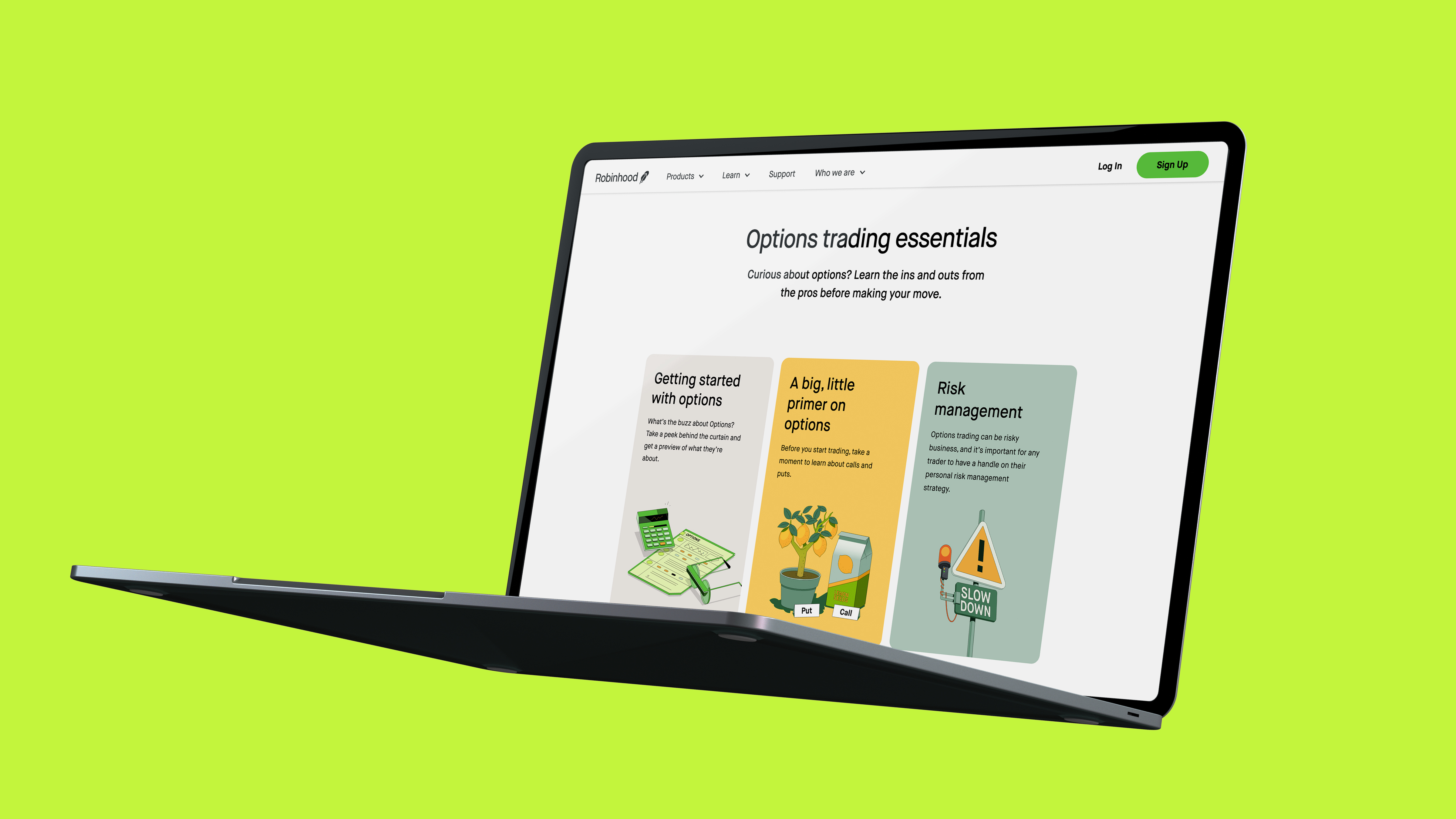
However, through this, they got more retail investors in the market and increased their revenue. According to their prospectus, more people are investing huge sums of money in the share market.
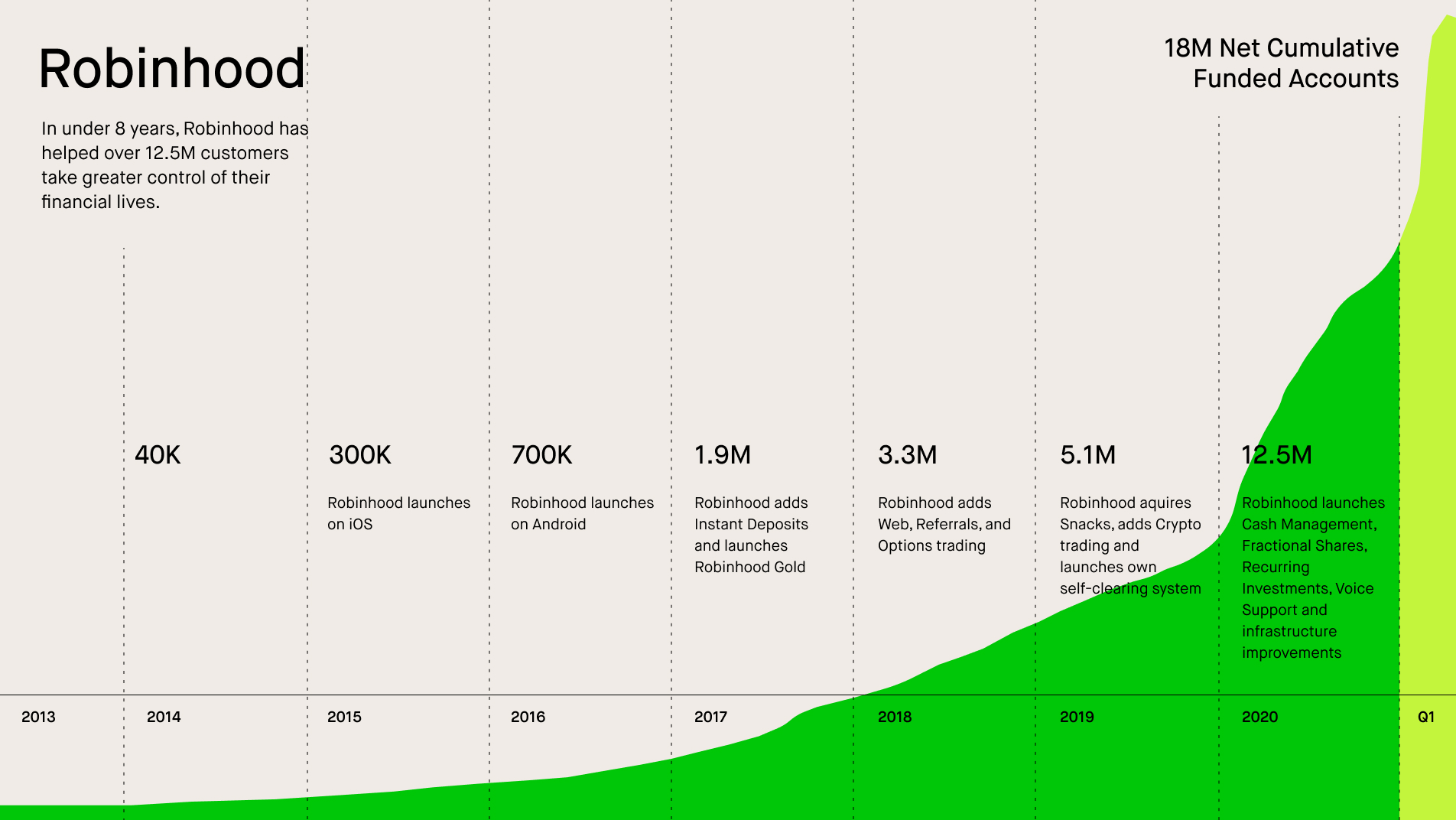
So, they were able to make it big. They now have more than 18 million users and changed the entire retail broker industry with free trade of stocks via a mobile app. It has invited retail investors to the markets and definitely proved all those critics wrong…
The first three months of 2021, were amazing for them. Their transaction based revenues increased by $324.8 million or 340% as compared to the three months ended March 31, 2020. The highest growth was seen in cryptocurrency trading as it was up 1967%. Crypto made up 17% of their total revenues as compared to 3% the year before. According to Financial Times, customers traded about $88bn in cryptocurrencies through Robinhood in the first three months of the year.
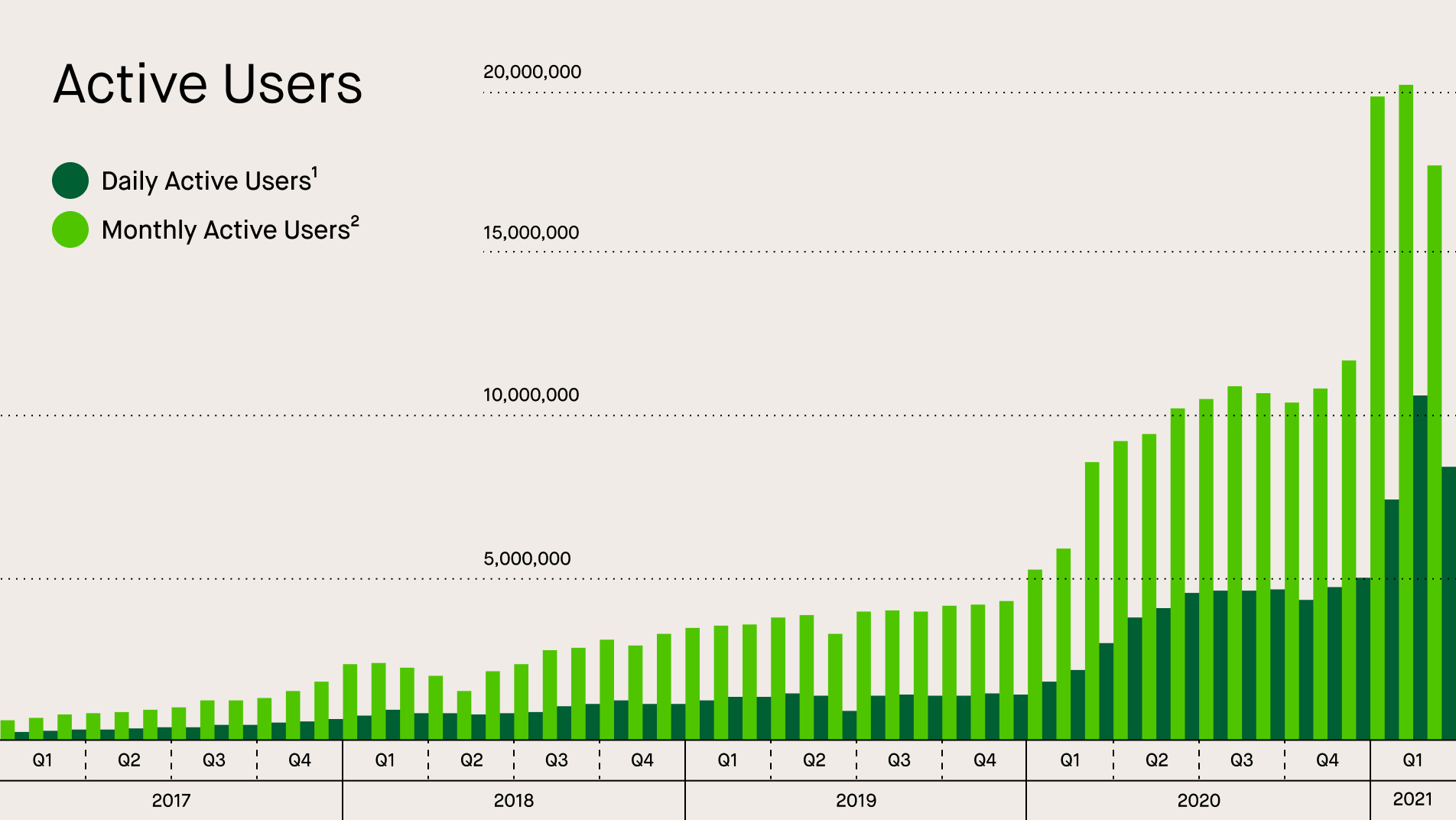
A sudden growth is seen in 2020, probably due to the pandemic. People started trading stocks in their extra free time. And since Robinhood was able to make it a game, it was fun as well. The first three months of 2021, show an unprecedented rise in active users as monthly active users crossed 20 million in February’21.
Payment for Order Flow (PFOF)
Robinhood has been criticized for it’s use of Payment for Order Flow (PFOF), which accounts for 81% of it’s Q1’21 revenue. When you place an order on Robinhood, it doesn’t go straight to a stock exchange, it goes through a third party. They select the third party on the basis of what’s most beneficial for them, not for the trader. They earn a small payment, like a penny or less per share. But it adds up to millions if you consider the entire user base of the platform. This is known as PFOF. Robinhood argues that this is what allows them to offer free trading.
While it’s currently not illegal in the US, PFOF has already been banned in United Kingdom. Thus, it limits their international expansion. If they can’t expand their operations, they might find it hard to grow after a certain point of time.
First Day of Trading
/cdn.vox-cdn.com/uploads/chorus_image/image/69651059/GettyImages_1331294668.0.jpg)
Their first day of trading was kind of disappointing. Robinhood is a catalyst in driving up shares of meme-stocks, but they were unable to take their own stock to the moon! It started trading at $38, dropped as much as 10% and closed around 8% lower at $34.9. But that doesn’t mean the future is bleak for them. Facebook’s IPO, also priced at $38 per share, fell during the first few trading days. Now it’s priced at $358.32. If that’s not successful, then I don’t know what is! Basically, the first day dip in prices doesn’t mean much.
Their IPO was different from others, because they offered more shares to their customers. They had planned to set aside 35% of their shares for individual investors, but set aside 20-25% in the actual offering. This indicated less than expected. Even then it’s a much larger slice of the IPO pie for retail investors as opposed to the Wall Street convention.
Opening day price rise in stocks is usually driven by a high demand from retail investors because they’re shut out of the IPO. But since Robinhood offered a much larger share to individual and retail investors, it could be the reason for fall in prices.
Fun Fact: their initial public offering wasn’t offered to retail customers at other brokerages. Exclusivity. They were only able to buy shares only once they began trading on Nasdaq.
Now, the fate of Robinhood’s shares lies in the hands of retail investors. Can they count on them?



 The Echo-nomist
Leave a comment