

Let’s go back to May 2021… Epic filed a court case against apple for “anti-trust” violations. They raised questions about Apple App Store’s anti-competitive monopoly and their in-app payment options. A little context: Epic added an option to pay directly for in-app purchases. They were looking to avoid routing the payment through Apple because they would have to pay 30% of the money to Apple (and Google in case of Play Store). Click here to read more about the case.
On Friday (10th September), a California judge ruled on the Epic v. Apple lawsuit. And the winner is, drumroll please 🥁🥁 – no one! Well, there are two ways to look at it. Either both sides won, or both sides lost.
Judge Yvonne Gonzalez Rogers ruled that Epic was unable to prove that Apple is a monopolist. As a result, they now owe Apple revenue commissions as back payment. But Apple’s victory wasn’t so sweet. She also concluded that Apple cannot keep developers from directing customers to alternative payment methods, outside its App Store.

This means, customers have the choice of paying directly to the developer. In such a situation, the developer wouldn’t have to pay a percentage of this money to Apple. Thus increasing the developer’s profit margin and decreasing Apple’s revenue.
Let’s break down the judgement…
Not a monopoly, shhh
Mobile games account for nearly 70% of Apple’s App Store revenue according to the ruling (source: The Verge). The twist is that less than 10% of all App Store consumers account for this revenue. Around 80% of the consumer accounts generate virtually no revenue. In contrast, 80% of all Apps on the App Store are free. The judge concluded that iOS and Android (Play Store), hold a near duopoly. However, Nintendo Switch and cloud gaming services have the potential to be their future competitors. Apple has a share of 55% in the mobile gaming transactions market and “extraordinarily high profit margins.” These are signs of monopoly but these factors alone do not show antitrust conduct. Gonzalez Roger’s said, “success is not illegal.”
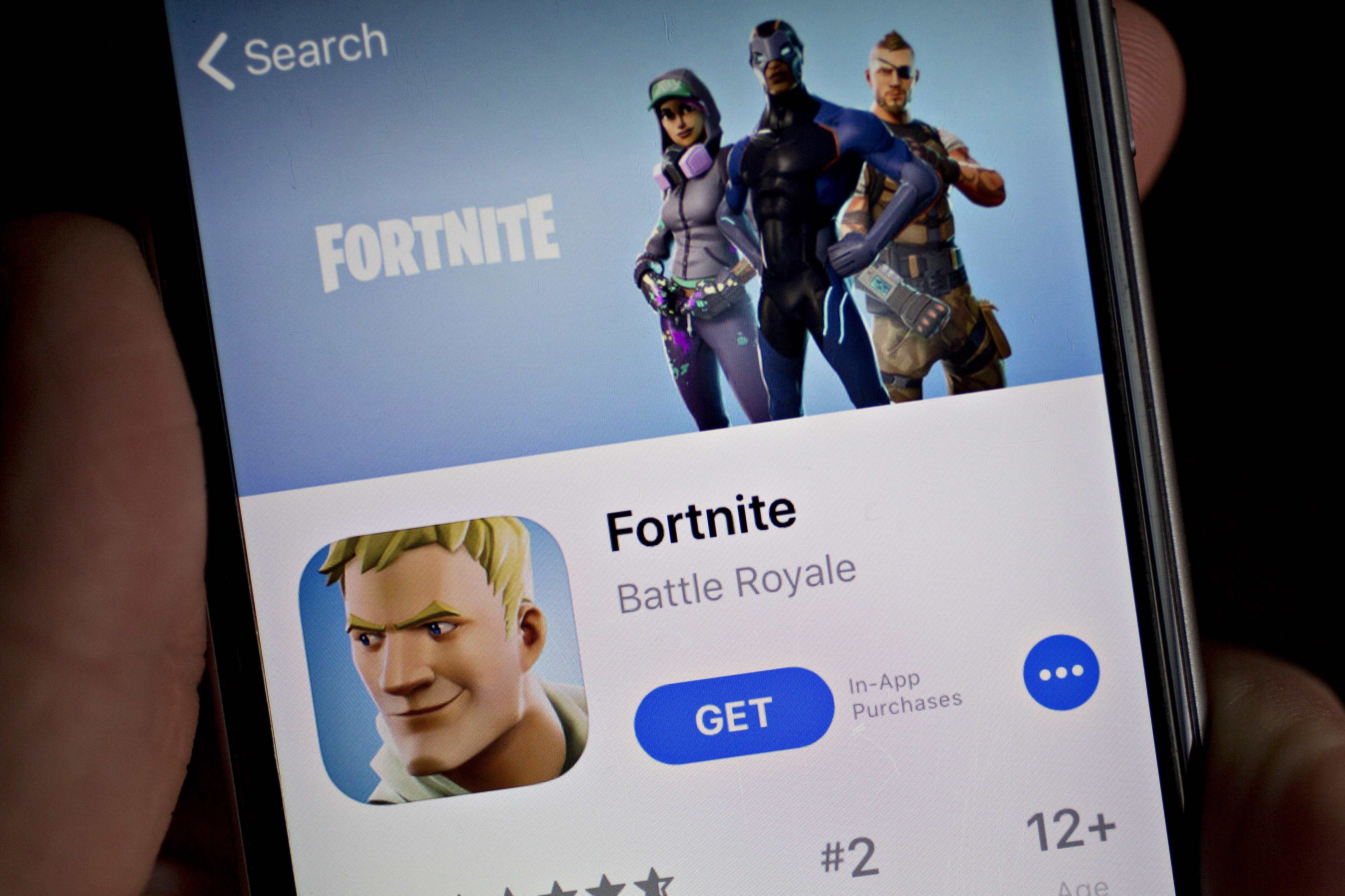
Epic’s arguments were not enough to convince the judge! They weren’t able to provide evidence of critical factors such as barriers to entry and conduct decreasing output or decreasing innovation. Their statement reads, “the Court does not find that it is impossible; only that Epic Games failed to demonstrate Apple is an illegal monopolist.”
Privacy isn’t negotiable
Apple has a reason for not allowing alternative payment options for in-app purchases- privacy. Their trial witnesses supported their claims about iOS’s safe and secure environment because of it’s wall-greened model.
Apple asserted two justifications for its app distribution restrictions. Firstly, prohibition on third-party app stores helps ensure a safe and secure ecosystem. It obviously benefits users, because they get to enjoy stronger security and privacy. But it also benefits Apple as they use this as a competitive differentiator for iOS. Epic called this claim a pretext for shutting down competition.
Secondly, Apple claimed that the distribution restrictions are part of their intellectual property licensing arrangement, for which it is entitled to be paid). Apple has actively licensed, developed and improved their IP for others, but only on the condition of iOS remaining a walled-garden. Which is why the argued that contractual restrictions are requisite to protect their IP investments and prevent free riding.
The court finds that centralised distribution through the app store increases security in the “narrow” sense, primarily by thwarting social engineering attacks like phishing. By narrow security, the judge was referring to malware…
Unfair Competition Law (UCL)
So Gonzalez Rogers concluded that Apple doesn’t monopolise mobile gaming. Then why do they have to provide an option for alternative payments? This is because the company does violate California’s Unfair Competition Law (UCL) through their anti-steering provisions which hide critical information from customers and illegally stifle consumer choice. Because of Apple’s current rules, users aren’t aware of what all the developers have to offer on their website (including lower prices!). Developers are allowed to email customers to advertise, but only through email id’s they haven’t collected through the iOS signup process. That massively restricted Epic since 73.1 million users exclusively played on iOS till it was removed (source: Nasdaq).
Judge Gonazlez said evidence shows Apple’s anti-steering restrictions artificially increase Apple’s market power by preventing developers from communicating about lower prices on other platforms. The harm from such provisions, outweighs the benefits. They also provide Apple a competitive edge. Thus, it’s a clear violation of UCL. They asked Apple to provide a remedy to eliminate these provisions. It will ensure increased competition, increase in transparency, increased customer choice and information, all while preserving Apple’s iOS ecosystem.
Breach of contract

The ruling declares that a part of Apple’s developer’s agreement (called DPLA) is unlawful. Why, then, does Epic have to pay for breaking it with the Fortnite payment system. And why doesn’t Apple have to restore Fortnite or keep other games by Epic if they don’t agree to follow their rules?
Epic claimed DPLA was illegal and unenforceable because it violated the Sherman Act, the Cartwright Act, and the UCL. The Judge concluded breaking UCL wasn’t a justification for Epic’s violation of the contract.
Also, Epic broke another rule in the process. They hid the alternate payment system inside a remote hotfix. Hotfixes function by coding an app by introducing new instructions on how to configure the settings in the developers’ app. In general, the developer can use hotfixes to activate content or features in an app that are there but not initially available to users. Apple’s policies, on the other hand, stated that they couldn’t “provide, unclock or enable additional features or functionality through distribution mechanisms other than the App Store.”

But, Epic ain’t going down without a fight. They have filed an appeal to this ruling, calling on a higher court to reexamine the case the case, hoping to overturn Judge Gonzalez’s ruling. That just means another battle between the two…



 The Echo-nomist
Leave a comment