

Ford, a US automobile giant, was not running a very successful business in India. So, on 9th September, they announced that they will completely shut down their manufacturing operation in India. The question arises, why did they take this decision?
Their decision came in the wake of huge losses accumulated by the company over the course of their operations in India. They incurred operating losses of about $2 billion against an investment of $2.5 billion (source: Ford India). The Managing Director of Ford India, Anurag Mehrotra, said “the decision was reinforced by years of accumulated losses, persistent industry overcapacity and lack of expected growth in India’s car market.”
In FY19, the company made revenues of ₹28,000 crore (approximately) and a net profit of 2011 crores. Those numbers don’t look half bad! That’s where the figures of FY20 come into picture. Their revenues fell to merely ₹2,000 crore, and instead of profits, they incurred losses close to ₹5,400 crore. So the company took a hit.
Industry overcapacity is a state where an industry produces more goods than the market can take. Automobile companies in India have added excess capacity, even as growth prospects dwindled, in hopes of acquiring a larger market share. But only a few companies were successful in doing so, and Ford wasn’t one of them.
In fact, the demand was much lower than the supply, which meant companies had to export vehicles to fully utilize their plants. There was a time when Ford was exporting over 90,000 EcoSport cars per year, almost twice the amount of domestic sales (source: Finshots). Exporting the cars manufactured in India could have been an exciting business opportunity. Production in India is cheaper as compared to other developed countries, due to abundant labour. Ford was looking forward to a free trade approval (FTA), which would open up European markets to cars from India. But the FTA has not happened. Hence, it’s operations in India have not been very successful and they have not been able to use a majority of its production capacity. This sort of called for an exit.

The MD also mentioned the continued slowdown in the Auto Industry in India. The numbers haven’t been positive and the compounded annual growth rate was merely 3.6% for the decade FY10-FY20. The slowdown in the automobile industry was followed by a general economic slowdown. Closely followed by Covid induced lockdowns and a global chip crisis. Their luck has been pretty bad. If you were to ascertain which factor was most critical for the industry, it would be a tough competition. Such a market isn’t very appealing to do business in. This has also led to General Motors abandoning its operations in India. Japan’s company Toyota has said it won’t expand its investments in India.
Ford hasn’t been able to successfully establish their presence in the market. In FY19, Ford captured merely 2.75% of the market. In comparison, Maruti Suzuki has captured over 50% of the market share in India.
How has Maruti been so successful, while Ford has lagged behind massively?

Maruti was initially setup by the Indian government and is not controlled by Japan’s Suzuki Motor. They use local partnerships to make maximum use of the company’s existing supply chain to offer affordable products to the customers. Otherwise automobiles can be pretty expensive. Companies like GM and Ford, on the other hand, have struggled to form alliances with local partnerships and cost cutting. Ford announced a partnership with another Mahindra and Mahindra, an Indian manufacturer, to cut developing and producing costs. However, the partnership collapsed in 2020 and Ford decided to go solo in emerging markets, including India. Needless to say, that didn’t work out too well for them.
Apart from this, companies like Maruti and Hyundai focused on launching new models or variants of their existing models at regular intervals. On the flip side, Ford’s product launches were slow and their variety was intangible. Contrary to popular belief, slow and steady does not win the race in real life- you have to be fast and steady. Life lessons 101. Hyundai and Maruti plan to launch 8 and 9 models, respectively, by the end of 2022. Ford, however, just had three cars planned in the same time period.
Top tier customer service can take a company a long way. Maruti did a good job at that with over 3,500 service stations across India, while Hyundai has more than 1,300 in the country. They were able to create a network of service centers and a relationship with their customers, unlike Ford. Even after two decades, they only have 308 service centres.

What’s next?
They won’t immediately stop selling cars. They will stop vehicle assembly in Sanand and vehicle and engine manufacturing in Chennai. The sale of their current products (like Figo, Aspire, EcoSport, Freestyle and Endeavour) will continue only till they exhaust their inventory.
They’re still going to be present in India. They will provide their existing customers with accessibility of service, spare parts, promising quality of service and honour their warranty promise.
Their exit has cast a shadow of uncertainty over the future of their employees. They have nearly 170 dealers who employ around 40,000 individuals. (source: Quartz)
Ford had to exit India because of a plethora of reasons. In their two decades of business in India, they weren’t able to crack into the market and penetrate it. It’s a highly competitive business and they weren’t able to make it.
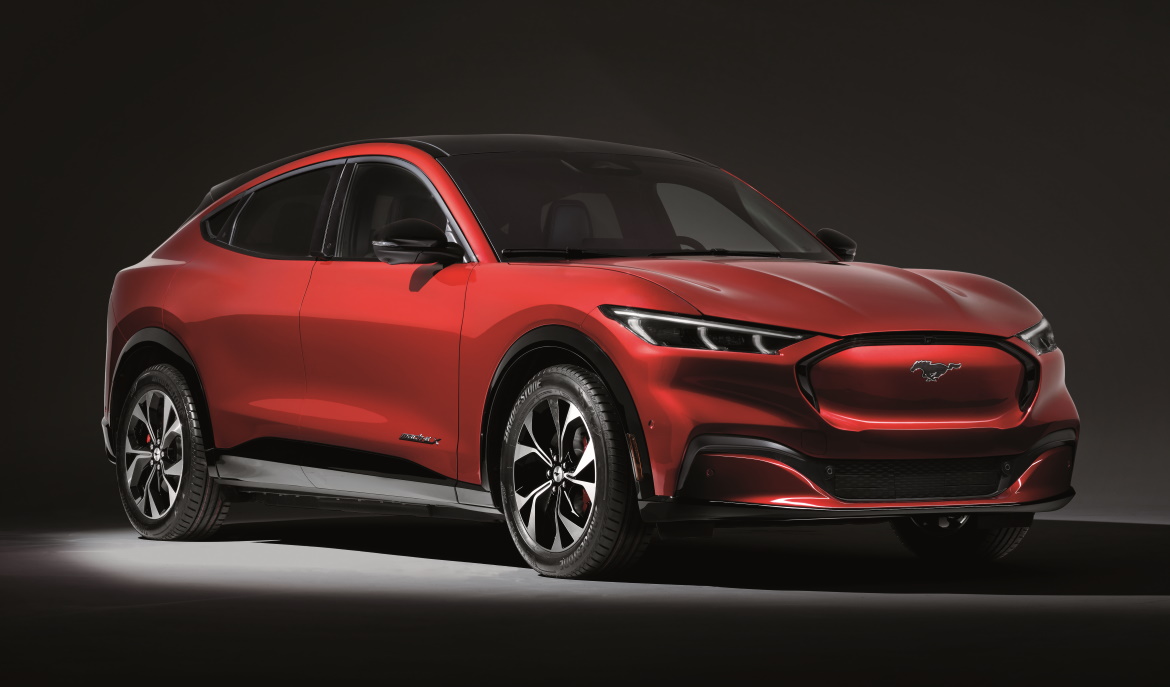
Ford will be taking the import route to sell cars in India. As of now, they have said their portfolio will include some of the most iconic Ford cars (like Mustang and all-electric Mach-E). They plan on selling them in the premium luxury segment. Maybe this works out well for them. Worst case scenario, they’ll lose the <2% share they have in the Indian markets.




 The Echo-nomist
Leave a comment