
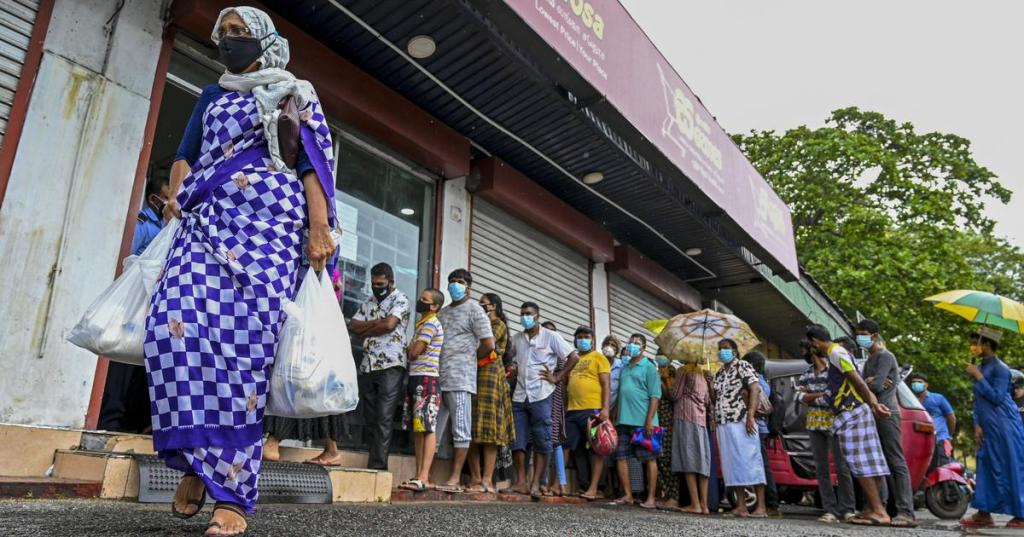
Sri Lanka got 99 problems and money could solve their biggest one- an economic crisis. Their problem seems to be stemming from their rapidly declining foreign exchange or forex reserves.
Simply put, forex reserves are assets such as foregin currencies, gold reserves etc. held by the central bank mainly to balance the accounts of the country, influence the forex rates of their domestic currency and to maintain their confidence in the foreign markets.
Sri Lanka’s GDP is fueled mainly on tourism, tea and a few other agricultural products. Tourism accounts for a whopping 10% of their GDP (source: Knoema). Since worldwide lockdowns due to the pandemic triggered a lull in the tourism industry, their economy was severely hit. The economy plummeted, shrinking by 3.6% (source: ET). Their coasts were barren, devoid of any foreign tourists and they lost out on foreign incomes. The industry that generated $455 million per month in pre-pandemic days, managed to contribute a measly $3 million in July 2021.

Amidst the crisis, in April, Sri Lanka banned chemical fertilisers and decided to go 100% organic. Literally all chemical fertilisers. Who got hurt this time? Tea plantations. Tea happens to be Sri Lanka’s single biggest export, bringing in more than $1.25 billion which is equivalent to 10% of the country’s export income. Apart from tea planters, it affected industries that aided in export of tea and fed off from tea exports. Eventually, the government relaxed a few restrictions but the damage was done. Since it impacted their exports, it led to a further decline in their forex reserves. (source: Al Jazeera)
So on August 31, Sri Lankan president Gotabaya Rajapaksa declared an economic emergency in the island nation. Because of a combination of reasons (including the ones mentioned above) they have almost run out of their forex reserves! Their reserves nosedived from over $7.5 billion in November 2019 to about $2.8 billion in July 2021. Things aren’t looking up for them. (source: Finshots)
Sri Lanka isn’t a self-sufficient country. They depend heavily on imports for various commodities ranging from food items to groceries to vehicles. How does a country pay for its imports? Foreign exchange (generally dollars). In order to import all the items they generally import, they’d have to pay for it using their foreign exchange reserves. Unfortunately, they are importing more than they are exporting and their reserves aren’t doing so well as is.

The repercussions of the same were: 6% rise in month-on-month inflation in August, depreciation of Sri Lankan rupee by 7.5% as compared to the US dollar, a critical food shortage and more. (source: BBC)
Let’s talk about the food shortage… A depreciating currency, hoarding and lack of imports has led to a steep increase in food prices in the country. Basic food items are out of reach of a large percentage of Sri Lankans. In order to tackle this, the government declared an economic crisis. This empowered authorities to seize stock of staple food, impose a price ceiling on staple foods, and help in rationing food. Rajapaksa ordered the army to seize all food supplies from traders and supply them to people at fair prices. They are ensuring that the remaining forex reserves are used solely for purchase of essential goods.
But Sri Lanka’s problems don’t end there. The country has heavily leaned on foregin loans for development and infrastructural activities in the past. Many of these loans are due in the near future. They repaid $1 billion of debt in the month of July itself, further depleting their reserves. Foreign bond payments worth $1.5 billion will mature in January and July next year (source: Economic times).

All economic crises are similar in some way or the other. The Sri Lankan economic crisis has shades of similarity with India’s economic crisis of 1990-91. Back then, India’s forex reserves dried up to the point that India could barely finance three weeks worth of imports. Right now, Sri Lanka is left with just enough resources to cover 2 months worth of imports.
Being a larger country, India was able to secure a loan from IMF and World Bank to finance its borrowings and increase their forex reserves. But as you know, there ain’t no such thing as a free lunch. This loan came with a condition to liberalise, privatise and globalise the Indian economy. These reforms shaped the Indian economy to make it what it is today. India has come a long way and their foreign exchange reserves are up from $6 billion in 1991, to $579.346 billion in 2020-21. (source: Trading Economics)
Can Sri Lanka do something similar to India? Can they use this as an opportunity to pave the way for a more vibrant and diversified economy?




 The Echo-nomist
Leave a comment