

2021 was a year marred by various shortages around the world. Some of them due to supply chain disruptions, others due to unprecedented demand.
People had big expectations from this year after the chaos in 2020, unleashed by the coronavirus pandemic and ensuing lockdowns. The global economy was expected to boom with the reduction in cases, arrival of vaccines and the resultant ease in restrictions. Global growth did roar back but soon lost its momentum. A sudden demand for goods was met by disorder in the shipping industry (clogging of major ports, backlog of container ships, Suez canal blockage etc.), thus throwing supply chains off track.
Homebound with no where to go and no place to spend their money (like travel, movies etc.), people splurged on buying goods. This was described by economists as revenge spending. This caused an extraordinary and unexpected rise in demand. However, this was around the same time as lockdowns at Chinese ports and South-Asian hubs, which created an imbalance between the demand and supply. Further, manufacturers couldn’t keep up with the demand.
Let’s take a look at some of the shortages:
Ketchup and Boba Tea
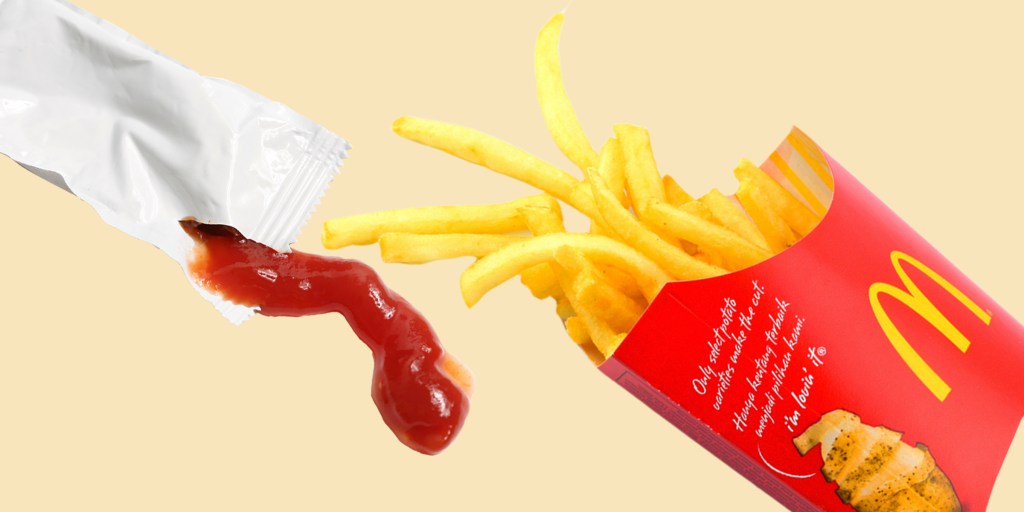

Since the pandemic began, there has been a rise in food home deliveries. While fulfilling this demand, restaurants added ketchup packets generously in takeout bags. In order to limit the spread of the coronavirus, restaurants switched to using sachets even for dine-in customers. This led to a huge rise in use of ketchup sachets. The demand rose so fast, supply wasn’t able to keep up. Other than an obvious shortage of ketchup sachets, it also resulted in rise in prices, thus increasing the cost of raw material for restaurants. Americans began selling their sachets for unreasonably high prices on platforms like eBay. People were so desperate, they bought these sachets at prices much higher than their retail price!
The boba pearls actually became precious due to a supply chain blockage that affected products shipped to the US from Asia. This was a major cause of stress for the East and West coast ports. Boats carrying thousands of shipping containers were just waiting on the outside of the ports. Since boba is mostly exported, there was a shortage. The shipment arrived much later than expected, causing a shortage. There were a few ships that did make it to the coast, however a truck driver shortage added to the delay and freight cost…
Here’s the entire story: Where’s the ketchup to my fries and boba to my tea?
Chip Shortage

The chip shortage was arguably one of the worst of 2021. And it’s still not over! The global chip crisis is still very much there. There was an abnormal demand for chips, supply and production couldn’t keep up, rise in prices, reduced availability of products that require chips. It’s the same old story.
Almost every electronic device (such as: phones, laptops, PlayStations, cars etc.) we use cannot function without semiconductor chips. The unprecedented demand was caused by a rise in laptops, phones and other gadgets with the spread of work-from-home and quarantine. The demand soon crossed pre-pandemic levels, making it hard for suppliers to keep up.
The automobile industry reduced their chip orders because of the pandemic, expecting car sales to go down. What they didn’t expect was for car sales to rebound so quickly. By the time they realised, they rushed to place orders. However, they got denied as the manufacturers were already overwhelmed with orders of laptop and smartphone giants. Also, electronic gadgets are a bigger market for chip manufacturers than cars.
Due to this, there has been a rise in prices for electronic gadgets as well as cars. The wait time for cars has increased and is as high as 10 months for some cars. Ford and GM had to shut down car plants because of the losses caused by this shortage. Tesla had to briefly close it’s Fremont factory due to shortages. On the bright side, the second hand car industry got a major boost.
When manufacturers realised that this shortage wasn’t going away anytime soon, they began drawing up expansion plans. However, it takes more than a year to set up a factory and get it running. Bottom line is, demand is way more than the supply and the shortage still persists.
To know more:
– The global chip crisis 🍟
– Global semiconductor crisis: With a side of chips
Lorry Driver Shortage

UK was faced with a shortage of truck/ lorry drivers. When the pandemic began, strict travel restrictions were imposed. Many of the European lorry drivers went home and not many of them returned. Due to rising Covid cases and shutdowns, the vocational driving tests were also shut down, leading to a loss of new drivers. Many of them didn’t think it was worth coming back since they have long-shifts and low wages.
New taxation policies in UK have made it more expensive for drivers from other European countries to be employed there. Further, since Brexit, security at the borders tightened and driving in and out of UK became a hassle. It also wasted a lot of time and time is money. Fewer and fewer young people want to be truck drivers, causing the problem of an aging workforce.
Earlier this shortage was limited to UK. Now, America is experiencing a shortage of more than 80,000 truck drivers. Around 72% of America’s freight transport moves by trucks, which means this shortage directly impacts the consumers (source: estimates by American Trucking Associations). Leaving Christmas shopping to the last minute wasn’t a good idea this year…
Here’s more about the shortage: The Lorry (driver) problem
Edible Oil Shortage

The price for edible oils like groundnut oil, mustard oil, Vanaspati, soya oil, sunflower oil and palm oil have been on the rise since January 2020. They rose 20% to 56%, setting new records. 65% of our oil requirement is met by imports. Since the global prices of oil are rising, prices in India are getting affected.
India imports most of its palm oil from Indonesia. Due to their biofuel mandates, which requires that diesel in Indonesia contain 30% palm oil derivative, the demand for palm oil in Indonesia increased, leaving them with lesser fuel to export. The demand in India stayed the same, but the supply fell. Hence, prices increased and there was a shortage.
India meets 90% of its sunflower oil needs by Russia and Ukraine. But because of the pandemic, their sunflower production suffered, causing them to cut down on exports. The prices steadily rose. This one affected the consumers directly since sunflower oil is used for various purposes in homes, like cooking. The customers weren’t very happy about this.
To know more: We need Oil, the Edible kind
Pokémon Card Shortage

Old is gold. Pokémon collectibles from years ago are worth thousands of dollars today. The prices for these cards are bizarre. At its peak, a box of sealed Pokémon cards from the late 90’s or early 2000’s (retailed at $100) could fetch as much as $50,000. A Charizard that would be sold at $300,000 today was priced at $16,000 in 2019.
Pokémon cards became kind of a big deal and grading companies got involved. They would authenticate and determine the condition of the card and rate it on a scale of 1 to 10. 1 being “poor” and 10 being “gem mint.” Grading really helped in fetching a higher price in the market. This was going really well and people earned insane amounts of money which led to a HUGE demand for cards. A lot of people tried to get their hands on them in brick and mortar stores. People stood in lines to get the card. Things even got violent as two customers3 wrestled for the last packet. The shelves with the cards would empty as soon as they were restocked.
Pokémon had to write a note to the public, acknowledging the enormous demand for their cards and its limited availability. They said they were actively working to print more cards as quickly as possible and at maximum capacity to support the increased demand. The Pokémon is unpredictable to say the least.
Here is the entire story: Who’ll poke Pokémon’s bubble?

That was 2021 as told by the shortages faced. Supply-chain disruptions was probably one of the most used phrases across industries this year!





 The Echo-nomist
Leave a comment