

If you’ve scrolled through Twitter or LinkedIn lately, you would’ve seen a lot of videos and opinions related to electric vehicles burning (literally).
Recently, there have been various reports of electric vehicles, scooters in particular, catching fire. The latest incident being one in Tirupur, Tamil Nadu, involving a scooter made by Okinawa. On April 9, 20 brand new scooters made by Jitendra New EV Tech loaded in a container in Nashik, Maharashtra, caught on fire.
These fires were first brought to everyone’s attention when two people died in Vellore after an Okinawa scooter was seen catching fire. A day after this incident occurred, on 26th March, an Ola Electric scooter went up in flames in Pune. Following this, there were similar incidents on 28th and 29th March which got people talking. This has put the safety of battery-operated two wheelers in doubt.
First we need to know what caused these fires.
All of these recent incidents have been reported from Indian cities where the temperatures have been rising. This year, some states in India experienced the hottest March in more than 50 years. Yet, according to experts, blaming the weather isn’t correct. That’s a common misconception. Instead, we should look more closely at how the Lithium Ion battery is packed and designed.
Lithium Ion batteries or Li-on batteries are the market leader in portable electronic devices (such as smartphones and laptops). They are a clean source of energy and are used in best selling electric cars (including Nissan Leaf and Tesla Model S) and electric scooters as a primary fuel source.
Despite the reality of rising temperatures and scorching summers, EVs consisting of Li-on cells require a few hundred degrees Celsius before suffering what’s called a ‘thermal runaway incident’ and the fires that emerge as a result. While hot weather conditions and inadequate thermal management systems of the battery can negatively impact performance and shorten life, they do not cause fires. It’s like using your phone on a hot day, after keeping it on the dashboard of your car. It’s hot and affects the battery performance but it doesn’t catch fire!

In a blogpost, Arun Vinayak, the CEO and Founder of Exponent Energy, wrote that 99% of the battery fires are due to short circuits leading to uncontrolled current. Exponent Energy is a Bengaluru-based startup that has a battery pack and charging station to fast-charge EV’s in 15 mins at an affordable price.
These short circuits can happen for three reasons:
○ Poor cell quality
○ Poor battery design (the way cells are connected and packed)
○ Poor battery management system (BMS) (management of cells via sensing and software intelligence)
Poor Cell Quality
This point is pretty self explanatory. Poor quality of the cell can cause an “internal short circuit.” There can be an issue with how the anode, cathode and separator are packed together due to manufacturing irregularities. If they accidently make contact internally, it’ll lead to a short circuit- which leads to uncontrolled current and ends up in a fire. At times short circuit can be caused due to poor quality of wiring itself.

Poor battery design
The design of the battery, especially its packaging, can impact its safety. Packaging refers to the way the cells are put together, how they are electrically joined and mechanically held.
Much like any living thing, cells also need to breathe. Huddling them together, with no space to breathe, zero spacing and insulation isn’t the brightest idea in the world. Every nut and bolt needs to be thought through and placed correctly. Indian roads pose a special challenge to the battery makers. They are capable of shaping anything loose. Imagine the EV going through a road with bumps in it and a loose bolt dances around with a group of active cells. It’s a bomb that’s about to diffuse any moment *boom.*
In the middle of scaling up operations, the industry resorts to taking shortcuts. Today, most EV makers in India import battery cells and assemble them into battery packs locally, making use of the abundant and cheap labour. While this way is cheaper and easier, it jeopardises the safety of the users.
Now suppose you have a high quality cell and a flawlessly designed battery. What could go wrong?
Overcharging

Overcharging leads to a build up on the cells, causing them to bulge and crush into each other, and in doing so leading to a short circuit. Today, most EVs charge blindly. The modules hold 2-3kWH of energy and are mandated by obsolete analog BMS’s that aren’t particularly smart. If a certain cell is acting rogue, the current BMS’s have no idea how to manage it. The software isn’t designed for that and hence it leads to an eventual short-circuit.
The solution?
Hero Electric is currently testing a device that would send three levels of alarm for the scooter if the battery temperature increases beyond the safety limit. The alarm works on the same principle as the fire and smoke alarms installed in offices and many homes. The device is self-powered on a button cell and integrated with a thermal. It can easily be placed on the battery box and warn the customer of any abnormal heating, giving the user enough time to take preventive action. This is particularly helpful in case of scooters with portable batteries.

Since it’s a developing and new technology, all OEMs (original equipment manufacturers) should road test the vehicle for at least 100,000 kms mandatorily on actual conditions to prevent such accidents and identify flaws before offering them for sale in the market.
Government intervention is necessary to ensure that premium quality batteries are manufactured and supplied. India does not have enough lithium reserves to meet demand or manufacture li-on batteries. They import li-on cells from China or Taiwan and assemble them in the country. The government needs to ensure that these cells are assembled correctly and placed in a manner that prevents short-circuits.
Another solution can be battery swapping. The government mentioned in their budget for FY23 that they will introduce battery swapping stations to increase the adoption of electric vehicles. These stations will definitely help with the apprehension regarding charging stations for EVs but they might also prevent fires. Battery swapping will allow batteries to cool down and charge them in a temperature controlled environment. This will address the problem of battery heating/ thermal runaway on account of fast charging at elevated temperatures and overcharging.

If you look at it objectively, the fires aren’t that bad. Undoubtedly they’re putting doubts in the mind of people regarding the adoption of EVs and threatening their safety. It gives consumers another reason to not switch to electric vehicles right now, along with lack of charging infrastructure and range anxiety. However, it’s necessary to look at the numbers.
Take a look at China- they have a large electric market with over 3 million EVs sold in 2021. According to statistics reported by the National Big Data Alliance of New Energy Vehicles in China, the actual failure rate of electric vehicles in the country is about 0.9-1.2 per 10,000 vehicles (source: Cell Reports Physical Science). That’s a failure rate of 0.009%-0.012%. Whereas, the same figure for Internal Combustion Engine (ICE) vehicles stands at 1.06 fire accidents per 10,000 vehicles (or 0.01%).
In the US, ICE fires are more common than EV fires. According to data by US National Safety Transport Board (NSTB), battery electric vehicles are much safer than hybrids of ICEs. Of every 100,000 EV”s sold in the US, only 25.1 experience a fire on the average and till date there have been only 52 reported EV fires. Hybrid vehicles, on the other hand, experienced an average of 3474,5 vehicle fires per 100,000 units sold and ICE vehicles saw 1529.5 fires per 100,000 sales. It’s clear which of them is the safer option. (source: HT Auto)
Such detailed data isn’t available for India. They barely make up 1% of the total vehicle sales. However, Amit Bhatt, the MD of India at International Council on Clean Transportation, believes the trends are similar in India as well (source: The Ken). It is estimated that 14,800 EVs were sold in India in 2021. If we take the failure rate to be 0.01% (like in China) or 0.025% (like the US), then the number of EVs sold last year which would be susceptible to fire, is anywhere between 1.5 to 3.75. (source: The Ken)
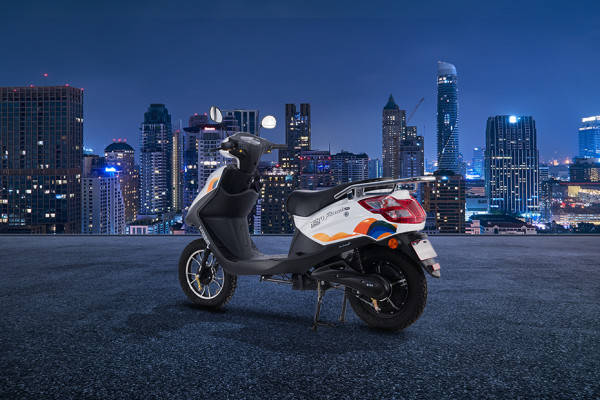
When CNG vehicles were initially introduced, multiple fires were reported. Many of them caught fire, especially those retrofitted locally with CNG kits. However, now most of the autos and cabs use CNG.
This doesn’t mean that vehicles bursting into flames can be overlooked. Even if 1 in 100,000 vehicles catch fire, it’s a cause of concern for the consumers. Because that 1 vehicle is highlighted by the media, not the other 99,999. And for a young industry such as this one, people’s perception plays an important role. Thus, addressing safety concerns is of utmost importance.
The industry is quickly gaining importance in India. While EV’s constitute merely 1% of the total automobile sales in India, the three-wheeler segment is now driven mainly by them and the two-wheeler segment grew more than 100% in FY22 compared to FY21 (source: Quartz).
The 5 fires that erupted recently might have a short term negative outlook. However, in the long term this shouldn’t impact the growth of the industry. There are many other positive factors at play which are pushing for EV adoption- Rising fuel prices, higher cost of ICE vehicles, government support and subsidies for EVs, central schemes, start-ups with new age business ideas etc.

So yes, the fires did raise some issues at a time when the industry is in a position to expand but hopefully it’s just a minor hindrance.
On the bright side, this caught the attention of a lot of people and there’s still time to fix all these problems. Just a few bumps on the road…




 The Echo-nomist

Leave a comment