
On 15th April, Twitter’s board of directors adopted a poison pill defense to protect the company from the Technoking. Cue, dramatic music.
Remember when Elon Musk bought a 9.2% stake in Twitter, a few days ago? We wrote a story about it: What are Elon Musk’s plans for Twitter?
Well, Elon Musk has made his plans clearer since. He wants to buy Twitter! He made an offer to buy the company at $54.20 a share. It could be seen as trolling the company, or legitimately promoting free speech on Twitter. According to him, Twitter needs to be privatised to transform itself. He believes in Twitter’s extraordinary potential and wants to unlock it. This week, he said that his offer was “best and final” and if not accepted, he would have to reconsider his position as a shareholder.
But Twitter wasn’t so keen on his plan. To defend their stake, they bought out their weapon- The poison pill. Sounds dangerous… The aim is to make it difficult for Mr. Musk to increase his stake beyond 15%.

But what is the poison pill?
Everyone calls it the poison pill but its technical legal term is shareholder-rights plan. Poison pill sounds much cooler. Anyway, they are legal maneuvers that make it hard for shareholders to build their stake beyond a particular percentage by triggering an option for others to buy more shares at a discount. Whoa. The gist of the plan is that if the buyer acquires more than X% of the company’s stock (X is usually 15 or 20), then it backfires on that person. Once the buyer goes beyond that limit, the company can allow the other shareholders to buy more shares at a discount, or by giving them more shares for free. So you can say, “if anyone goes above 15% of the stock, then we will distribute one free share of stock for each existing share, except the shares of the person who went above 15%. They won’t get any of the free stock.” When someone does go above 15%, everyone else’s shares get doubled, taking the acquirer down to 8%!
The point of the pill is to discourage anyone from acquiring more than X% of the stock. The pill was invented in 1982 by lawyer Martin Tipton as a response to tender-based hostile takeovers. They became popular during the 80s in response to the wave of takeovers by corporate raiders (corporate lingo) such as T. Boone Pickens and Carl Icahn. It got its name from a poison pill physically carried by various spies throughout history, which was ingested by them if they were discovered to eliminate the possibility of being interrogated by the enemy.
Poison pills resurged and gained popularity in 2020 as a result of the pandemic. Initially, the stock markets plummeted due to the rise in cases. It was an opportunity for shareholder’s to buy large stakes for lower prices. Because of this, various companies turned to shareholder rights plans to defend themselves against opportunistic takeovers. In March 2020, 10 U.S. companies adopted poison pills as a line of defense, setting a new record! Nearly 100 companies adopted the pill in 2020. (source: The Conversation)

The board of directors of public companies usually have a dim view about takeovers such as the one Musk is planning. But why?
They think of their relationship with the shareholders as that of a trustee and a beneficiary and do not like the idea of someone buying the company out from under them. They would much rather sit down with the buyer and have a tidy negotiation. Here’s how it usually goes: the buyer comes to the board and offers a merger, they negotiate the terms, the board agrees to the deal, the buyers pays an equal price to all shareholders (a price that reflects the full value of the company), the buyer and board will seek the shareholder approval together. If the shareholder’s don’t agree, the buyer steps away peacefully and they go on about their daily jobs as if nothing happened. Nice and clean. It’s the dignified and controlled way that corporates prefer to do merger-acquisition negotiations.
The shareholder rights plan doesn’t doesn’t stop the company from engaging with parties or accepting an acquisition proposal if the board believes that it is in the best interest of the company and its shareholders.
Adopting the pill can also have a bright side. It gives the managers a tool to bargain hard with the potential bidders for a higher price. It gives the managers time to search for a better deal for the shareholders by buying time and preventing rash decisions. In 2010, Airgas Inc. successfully thwarted a hostile takeover bid by Air Products by shareholder-rights plan. Five years later, the management of Airgas sold the company to Air Liquide at double the price they were offered by Air Products.

Coming back to Twitter’s pill… Their board voted unanimously to adopt the pill plan for a year. Twitter filed an 8-K form with the US Securities and Exchange Commission (SEC) detailing the plan. They mentioned that their poison pill has an exercise price of $210. This means each shareholder can pay $210 to acquire a stock having a then-current market value of twice the exercise price. So each share would be worth 210 x 2= $420! That number might seem arbitrary but 420 is a weed joke. They are dealing with Elon Musk after all. Twitter really said two can play this game.
Bloomberg imagined the conversation would go something like this:
Lawyer: The pill will be structured to let other shareholders buy a large amount of stock at a discount to dilute Musk’s stake.
Twitter: How much stock?
Lawyer: It doesn’t really matter, but a lot, enough to swamp Musk. Typically the exercise price would be like $100 to $200, and you’d get twice as much stock, like, $200 to $400 worth.
Twitter: We are defending against Elon Musk here and ordinary tactics are not enough. We need to harness the power of the number 420.
Lawyer: Okay then $420 worth of stock, whatever.
Bloomberg
Basically, it means that the shareholders will be able to buy one thousandth of a preference share of the company at a price of $210 for each share of Twitter common stock that they own. Since it’s a preference share, it comes with voting rights and would immediately be worth double the price they paid for it.
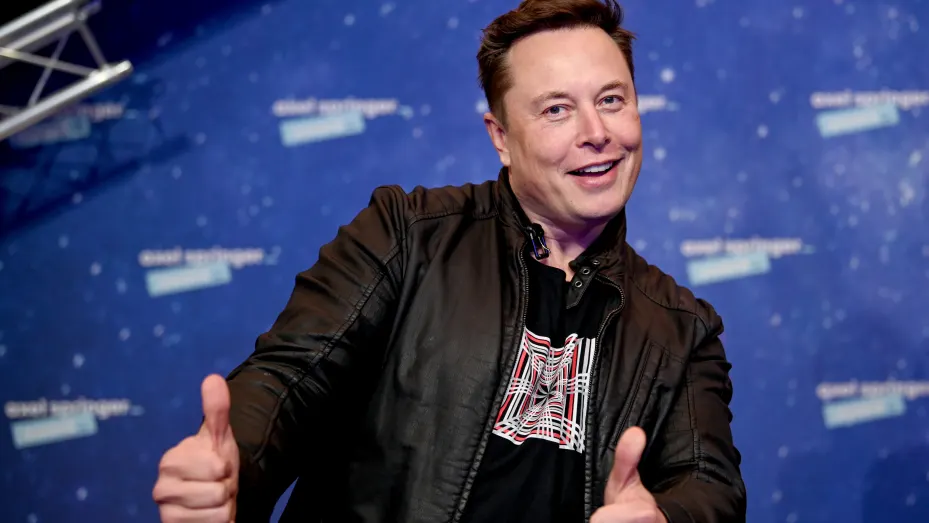
Will Musk swallow this pill?
The pill strategy has proven to be quite effective in checking hostile takeover attempts in the past. Netflix has used the pill to stop activist investor Carl Icahn from taking over in 2012. Papa John’s adopted one to prevent disgraced founder John Schnatter- the Papa John- from regaining control in 2018. To date, no buyer has ever swallowed the poison pill and forced a takeover at an inflated price (source: Robinhood). More often than not, they back down. Yup, it’s a hard pill to swallow.
But remember, past performance is no guarantee of future returns!!
There’s always a first time. If there’s anyone who would risk swallowing the pill, it’s Elon Musk. He’s not exactly your traditional investor. And he seems pretty serious! He has even laid out his funding plans for the takeover. In a new filing with the SEC, he laid out his plan for the $46.5 billion worth of loan to finance the buyout offer he made (source: SEC). It is provided through two debt commitment letters from Morgan Stanley Senior Funding, in which the bank commits to offering a series of loans worth $25.5 billion. And the remaining $21 billion would be covered by the riches man on earth, Musk himself.

Theoretically, musk could also dodge the pill. He could persuade 51% of the shareholders to replace Twitter’s board and then buy Twitter anyway, thereby bypassing the pill. That’s not impossible given Musk’s influence and following but it could still take a while. In the meantime, Twitter could choose another buyer. Word on the street is that private-equity giants Thoma Bravo and Apollo are considering bids. However, neither of them have confirmed or denied this. They could also negotiate a better deal with the current buyer. The price Musk is offering right now represents a 38% premium to Twitter’s share price since April 1st (3 days before the world learnt about Musk’s share in the social media platform). However, it’s still 26% below it’s 12-month high.
A tender offer makes a direct appeal to shareholders to sell- or tender- their shares at a specific price. ‘Love me Tender’ might be the lyrics of Elvis Presley’s song, but it might also be a hint as to what will Musk’s next steps be…
Elon Musk pointed out that the board’s economic interests aren’t aligned with those of the shareholders. If you exclude Jack Dorsey’s share, the rest of the Twitter board members collectively own a very small shareholding of the company. Looks like Elon is already trying to collect the shareholders’ support. The board has some work to do regarding inspiring confidence among its shareholder base.
Only time will tell us if adopting a poison pill was the right decision or not. It’s definitely interesting to watch the drama unfold. In the meantime, Twitter and Musk could really do with a chill pill…


 The Echo-nomist
Leave a comment