
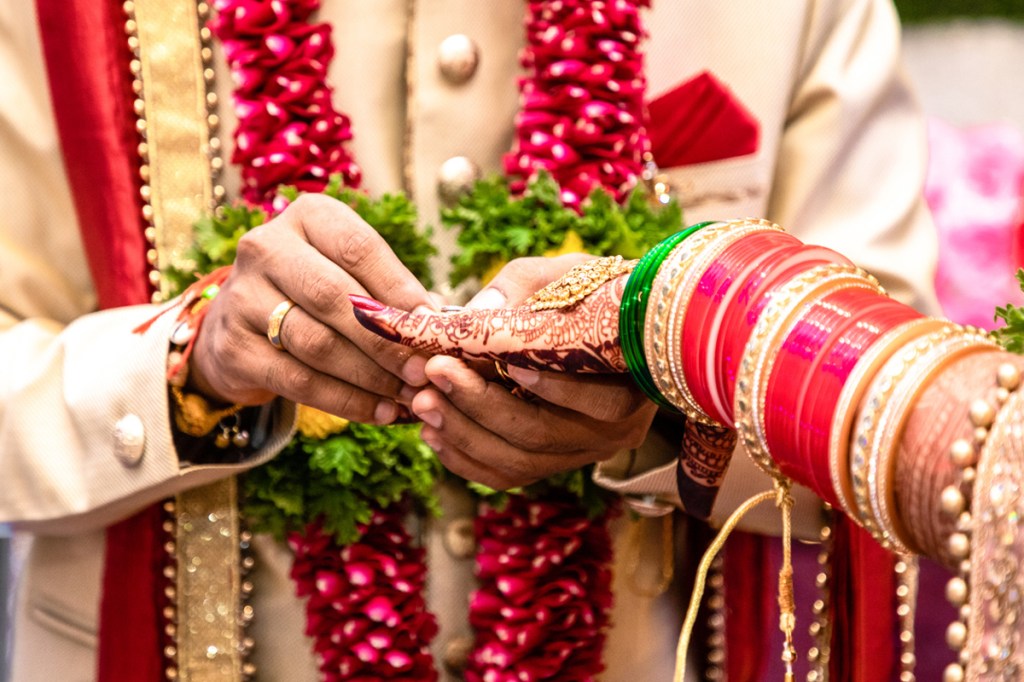
Congratulations are in order… to the 3.2 million couples who got married in November and December of 2022!
They sure gave a boost to the economy and the billion dollar wedding industry. Following two years marred by covid induced lockdowns and restrictions, the surge of big, fat Indian weddings doesn’t really come as a surprise. Indian weddings are famous for being an extravagant affair with a lot of people involved. After all it’s a $50 billion industry… (source: Business Insider)
Beautifully decorated venues with flowers and lights and a lavish spread consisting of unique designs, filled with gracefully dressed people smiling for the camera. The photographer capturing all the wholesome moments, guests dancing on the dance floor and a whiff of celebration surrounding the air. It’s right out of a movie!

Those who love weddings are sure to have enjoyed this season. Chances are, you have probably been invited to or at least heard of a wedding in your vicinity.
After celebrating 3.2 million weddings from Nov’22 to Dec’22 and many more lined up for the Jan’23 to Feb’23 period, the number of marriages has increased by 28% compared to last year. Generally, India records around 1 crore weddings each year. The overall market is likely to grow by 200% said Vikaas Gutgutia, the founder and managing director of Ferns N Petals Pvt. Ltd. which owns and operates Fnp Weddings & Events India as well as 11 large wedding venues in and around Delhi NCR. In addition to this, the industry made ₹3.75 lakh crore in just two months (November and December 2022) (source: moneycontrol).
Weddings bring a steady cash flow to many sub-industries such as = Matrimonial portals, jewellery, clothing and stitching, hotels, photography etc.
Let’s start with the Indian apparel market. Planning Indian wedding outfits might be one of the most important and hectic tasks of all. Rushing to get them altered, making sure they match the colour scheme for the event, ensuring that they’re elegant, all of this under immense pressure. Outfits are something common for the bride, groom and all of the guests. One can only imagine how many people that makes. The industry is valued at ₹1.02 lakh crore with a growth rate of 18% CAGR. It’s a lucrative business since brands get 70% of the gross margins. Interestingly, only 20% of the market share in this industry lies with organised players. That’s probably because a lot of the workers are involved with local botiques and many are self-employed (source: ICICIdirect).
In the organised sector, the most significant player is probably Manyavar. They’ve spent a great deal of time, effort and money in advertising and improving brand recall. Think: all those TV ads and billboards with Virat Kohli and Anushka Sharma and their infamous ‘Dulhan Wali Feeling’ campaign. That’s certainly got them somewhere. They have 5 major brands that constitute approximately 90% of their revenue- Manyavar, Mohey, Mebaz, Manthan and Twamev. Manyavar enjoys a business with 70% gross margins and a 30% operating margin.


The e-tailer, Myntra, also saw a 100% rise in demand in the premium and heavy Indian wear segment, when compared to the previous year.
Raymond is also a significant market player in this segment. In their Q3 reports for Fy23, they noted that they’re working to meet the “strong festive and winter wedding demand.” Their revenue is up by 38% vs. the previous year and up by 15% for the pre-pandemic period. However, they also pointed out that the working capital costs have also increased slightly in this period due to the heavy demand. Nevertheless, the company achieved profitable growth compared even to pre-covid levels. All eyes are on the groom…
After two years of muted demand, many consumers are choosing to go all out with their weddings. This means sparkles, glitter aaandddd jewellery! Who doesn’t love diamonds and gold? Titan’s customers sure do. Titan’s watches may be famous, but a majority of their revenue comes from their jewellery brands- Tanishq and Zoya. Titan’s jewellery division achieved an 11% growth YoY. According to their Fy23 Q3 results, healthy new buyer growth in the festive period, coupled with higher value purchases in the studded category (jewellery with stones affixed on it), fueled this growth. In fact, the studded category moderately outpaced the plain gold jewellery segment growth, in relation to the same period in 2021. Their quarterly update also quotes, “wedding sales grew in line with the division’s overall sales.”
Indian households are huge on gold. They held close to $1 trillion worth of gold ie. 11% of the total global deposits. So the increase in sales adds up.
Covid bought about a change in how people plan their weddings. Earlier, it was very common to have a guest list that consisted of 450-500 people. However, most of the post covid weddings are inviting fewer people, limiting the guests to 200-250. But this doesn’t imply that people are spending less on weddings as their budget has hardly changed pre and post covid. With greater emphasis on guest experience, many couples are booking hotel rooms for guests to stay in and even choosing to have destination weddings.
That’s the reason hotels at popular destinations are fully booked. For example, it’s nearly impossible to get a room at the Fairmont Hotel, Jaipur as it’s almost sold out till February’s end. They have a lot of weddings lined up, including an NRI wedding. Rajiv Kapoor, the property’s general manager, said “we are closer to Delhi/NCR, but we have been getting bookings from all over India- from Guwahati to Sikkim to Hyderabad, Chennai, Punjab and Gujarat.” He also noted that the rates are up 35% this year, despite which they will cross 100 weddings.
In terms of spending, hosts have easily paid hotels in the range of Rs 4,200-5,000 for double-sharing rooms (source: ET).
Manbeer Choudhary, the chairman of Jewels group of Hotels, which runs the five-star hotel Noor Mahal in Haryana said the property is sold out from October 15 – March 23. They are hosting an average of 8-10 functions every day! Hotels in locations around the country are fully booked from Goa to Mussoorie, Ranthambore, Hampi, Chandigarh, Kochi, Jalandhar, Lucknow, Udaipur, Jaipur. You name it and it’s booked. It’s the light at the end of the covid infested tunnel for the hotel industry.
This festive + wedding season has also given a massive boost to the Indian automobile sector. It was a much-needed boost as they were struggling due to the chip shortage and of course, the pandemic ridden slowdown. The industry witnessed a 26% growth in Nov-Dec’22 as compared to the same period in 2021 (source: Quartz). November 2022 has clocked the second highest retail in the history of the Indian automobile industry behind March 2020. But what have weddings got to do with this?
Well, Indians have a propensity to “gift” well at weddings. These “gifts” are usually something big like a car, refrigerator etc. As a result of their gift-giving, the wedding season has given a boost to the sales of two-wheeler and four-wheeler vehicles. Other than automobiles, the sales of other durable goods also saw an uptake during the festive season.
Fun Fact: around 80% of the suitcases are purchased for weddings!
The luggage industry is more affected by weddings than you would’ve thought. They have a higher revenue stream from newlyweds rather than travellers. After all, post-wedding calls for a honeymoon and the newlyweds need suitcases to pack all their essentials. One often comes across couples on their honeymoon at the airport, dragging around their strollers from VIP or Safari or American Tourister.
Catering is one of the most important details at a wedding. I know I only go to weddings for the food, oops. While the guests enjoy the food, the hosts have a tough time negotiating the price per plate, the menu and other details, however minuscule. The catering industry is expecting a 25% revenue growth for existing markets from 2019. Madan Lal Halwai, one of the oldest sweet shops in Delhi, said the average rate of mithai boxes this wedding season ranged from 500-1500, which is 30% higher as compared 2019 (source: CNBC).
A trend of rising prices, and hence higher revenues can be noticed across industries. However, this does not imply higher profits. Due to inflation and unresolved supply chain blockages, the procurement and working capital cost has increased. Hence, the margins have decreased.
While there is a change in the kinds of wedding people want, in terms of number of guests, decorations etc., it’s clear that people were eager to bring back big fat Indian weddings. The pandemic posed economic turbulence for this huge industry, however, it’s back and it’s bigger and better than ever. While it’s hard to predict if the industry will be able to maintain such a large number of weddings, they probably won’t fall back to the low they hit during the pandemic. Indian weddings have a mixed influence from over-the-top Bollywood weddings and traditional practices, which paves the way for its stability. And with the population pyramid broader from the bottom, you can expect more wedding invites in upcoming years!




 The Echo-nomist
Leave a comment