
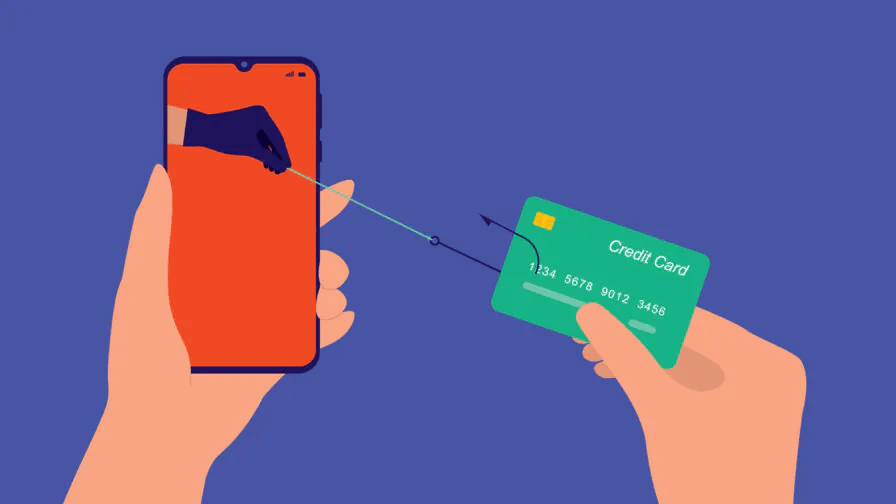
Sometimes, when you’re bored in class or have nothing to do, you might find yourself browsing through amazon, or any other e-commerce site, searching for items you definitely do not need. Suddenly, you come across something that is reasonably priced. Your cursor hovers over the ‘add to cart’ button. You devise a strategy to leave it in the cart for a few days and buy it when the price drops during a sale. But the very next day, you get a notification for a time sensitive discount on the product. Surely this was a sign to buy it. To not buy it would be stupid. What if this is the best discount you’ll find? And so you proceed to purchase it and not-so-patiently wait for it to arrive.
Sounds familiar? This is a classic example of dark pattern.
Dark patterns have become increasingly popular in recent times, making them difficult to define. Companies have gotten creative with how they design these, thus ruling out the possibility of formulating a code to identify these. Basically, a dark pattern is a design that manipulates and steers customers towards decisions that are “beneficial” for them, such as completing a purchase or upgrading a service, through persuasive designs. While companies require persuasive designs in order to attract customers, it’s not always helping the customers. When customers are influenced to make decisions that violate their best interests, things go dark.
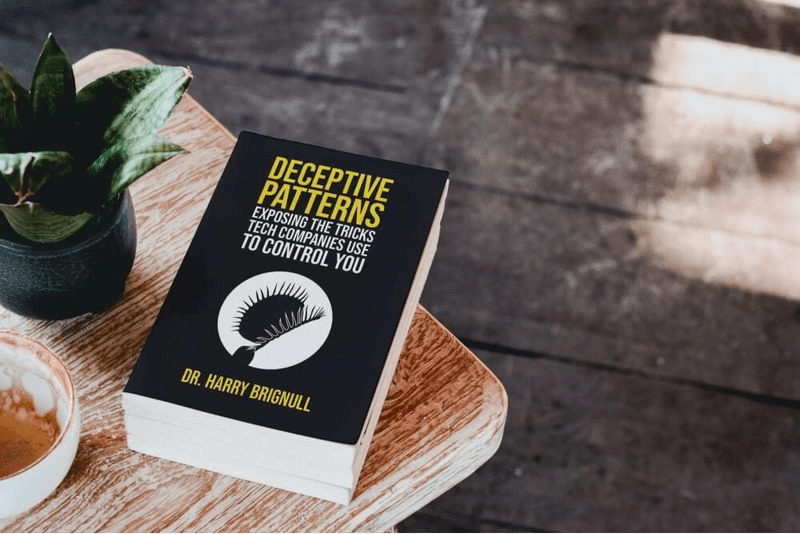
The term was coined by Harry Brignull, a User Experience (UX) director, in 2010. He still keeps track of all the developments involving deceptive patterns on his website. He also maintains a ‘Hall of Shame‘ with hundreds of examples of deceptive patterns used by companies around the world.
Many social media ads and websites show a pop-up asking you to allow the service to use your app and website activity. At the bottom, it provides two options: a non-highlighted option to ‘make ads less personalised’ and a highlighted option that reads ‘make ads more personalised.’ The way the options are worded, along with the highlighted option, is pushing consumers towards a single choice. This is another form of a dark pattern.
Dark patterns have become more prevelant in recent times but have been present since before the internet, tricking consumers into giving up their data, money and time.
Put a finger down if you have fallen prey to any of these dark pattern tacticts:
- False Urgency: It creates a false sense of urgency/scarcity. For example – only x items left in stock or countdown timers.
- Sneaking: Adding additional items to carts without the customer’s consent, adding hidden costs, hiding a subscription under the pretence of a free trial.
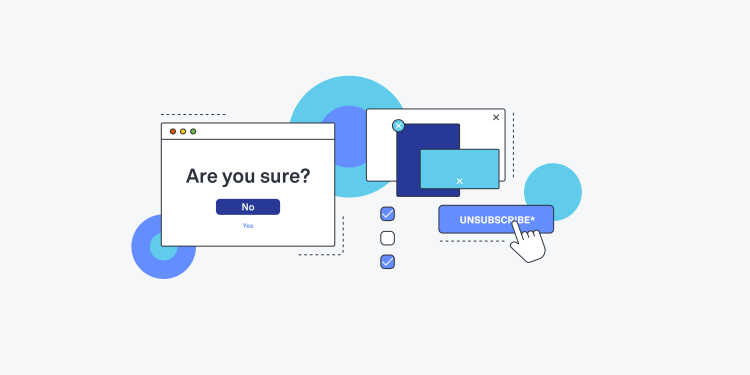
- Subscription Traps: It’s easy to sign up for a service, but there are either a million steps involved in cancelling the subscription or it’s impossible to navigate the subscription button.
- Confirm Shaming: This is when a website tries to guilt trip you into opting in. When a website adds charity in the cart and the option to opt-out reads “Charity is for the rich, I don’t care.”
- Nagging: App notifications that are more persistent and repetitive than Indian parents.
- Obstruction: Making it hard for the user to cancel subscriptions or orders or ask for refunds.
- Forced Action: Forcing users to sign in or share personal information in order to access a website.
- Drip Pricing: All elements of pricing aren’t revealed upfront or the amount at the time of checkout was higher than the amount originally disclosed.
- Bait and Switch: you were offered a quality product at a cheap price but just as you were about to pay/buy the product, the seller states that the product is no longer available and instead offers a similar-looking product but more expensive.
- Disguised Advertisement: Using fake testimonials, false advertising, endorsing a product without revealing it’s an ad etc.
One of the most common examples of dark pattern that people turn a blind eye to is cookies! Data is equivalent to oil for websites and apps. They resort to dark patterns to trick users into granting consent to be tracked and/or allow the use of their data in ways they didn’t expect or want. Legally, they have to provide an option to opt out of being tracked, but it’s either hidden or highly inconvenient to do so.
When you visit a website, there’s a brightly coloured option to ‘accept cookies,’ along with a dull-coloured button that says ‘manage cookies’ or ‘don’t accept.’ The latter two options are a little harder to navigate since it redirects you to a menu where you have to disable each clause manually. Many people don’t understand what is being requested in the first place. Those who do understand don’t have the time to do this for each and every website they visit. Some websites are nice enough to provide another dull-coloured button that says ‘necessary cookies only.’ This one is pretty easy to navigate. Some websites just state that you agree to their cookie policy by continuing to use the site.


The worst part is, these tricks work! According to a research, consumers are 2 to 4 times more likely to perform a specific action in a environment containing dark patterns.
Now you have an idea about what exactly dark pattern is. It isn’t ideal for consumers but what can be done to stop it?
The government also realised the prevelance of the issue and decided that they had to step in. In 2021, Advertising Standards Council of India (ASCI) asked social media influencers to disclose promotions in order to tackle the issue of disguised ads. 29% of the ads processed by ASCI in 2021-22 pertained to disguised ads by influencers, a kind of dark pattern.
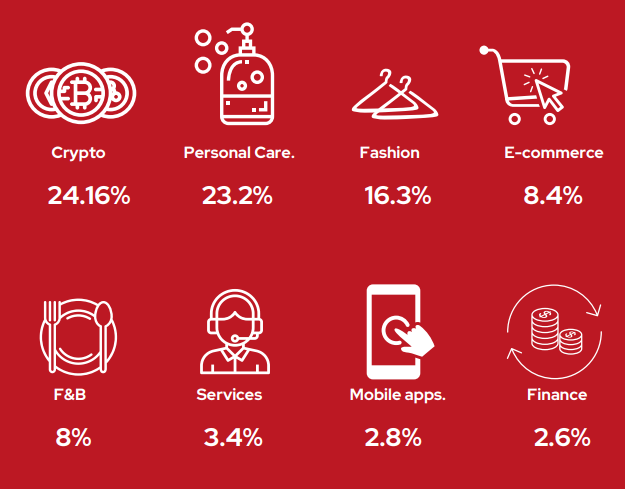
Recently, the Ministry of Consumer Affairs came up with some draft guidelines called Guidelines for the Prevention and Regulation of Dark Patterns, 2023. These guidelines list down 10 dark patterns and aims to put an end to these practices. In case of any ambiguity or dispute in interpretation of the guidelines, the decision of the CCPA (Central Consumer Protection Authority) shall be final.
EU and US have also been cracking down on dark pattern. The French privacy watchdog CNIL (Commission Nationale de l’Informatique et des Libertes) fined Facebook and Google a total of €210 million in 2022 for making it hard to opt out of cookie tracking. Their case stated that accepting cookies took a single click, however refusing them required multiple steps. Think: the money they made by selling this data to advertisers.
The US has been trying to pass the DETOUR Act (Deceptive Experience To Online Users Reduction), which was originally introduced in 2019. FTC (Federal Trade Commission) in the US hosted a series of workshops about dark patterns following which they prohibited deceptive acts and practices that misrepresents or omit material facts. The EU has an Unfair Commercial Practices Directive in order to avoid misleading consumers and affecting their transactional decisions.
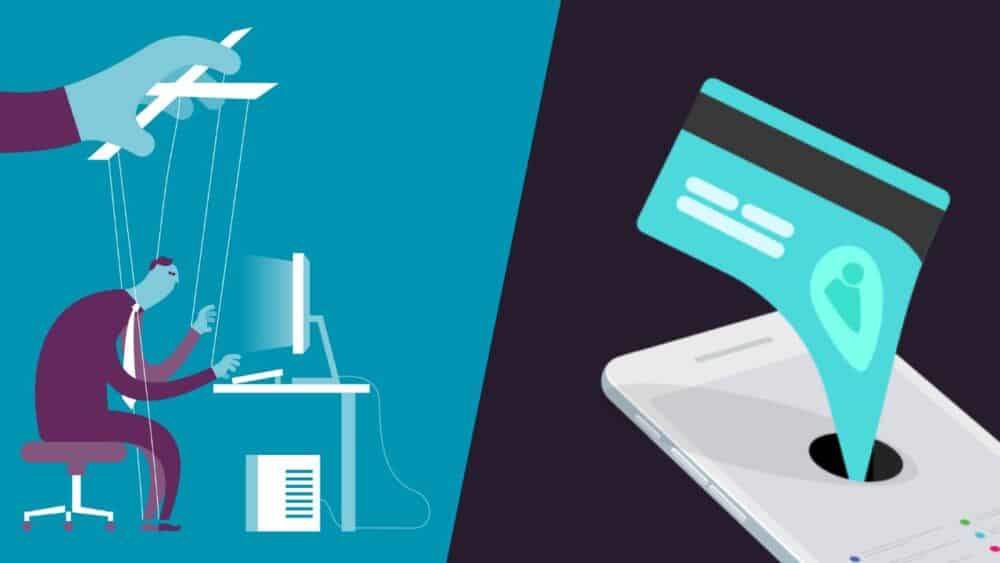
The question arises, are these laws helpful? To some extent, yes. They definitely help in reducing the prevalence of dark patterns. However, these tactics are disguised in so many ways, it’s hard to define them all, leading to ambiguity in legislation. Furthermore, when an e-commerce site mentions that they only have 2 items left in stock, it’s tough to prove whether they’re resorting to manipulative methods or telling the truth.
Regulating dark patterns isn’t an easy job, but regulators are trying. Until they’re successful, protect yourself from falling for their deceptive tricks!
It’s EVERYWHERE!
While researching for this story, I was reading some articles when this happened:
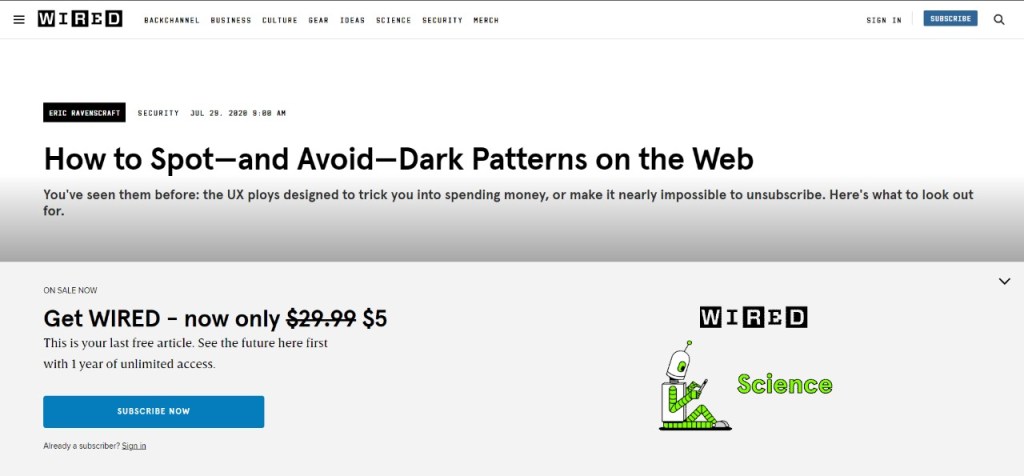
Wired was really committed to helping me spot dark datterns on the web. They weren’t so committed to the avoiding-dark-patterns part though.


 The Echo-nomist
Leave a comment