

This year, Nirmala Sitharaman delivered the Union Budget 2022-23 with her shortest budget speech so far. She spoke for 1 hour and 30 mins which isn’t that short but usually these speeches last for at least 2 hours. But people had a lot to discuss after her speech…
Let’s take a look at some of the highlights from the budget.
Crypto
Nirmala Sitharaman announced that the government wants to tax all income derived from the transfer of virtual digital assets. These gains are to be taxed at a flat rate of 30% with an additional 1% tax deducted at source for transactions over a certain, yet to be defined, threshold. Almost everyone expected that the government would clarify how cryptocurrency taxation works and they did not disappoint. If you sell digital assets you will pay tax on your earnings and if you gift digital assets to anyone, the receiver will have to pay taxes. A gift with a price!
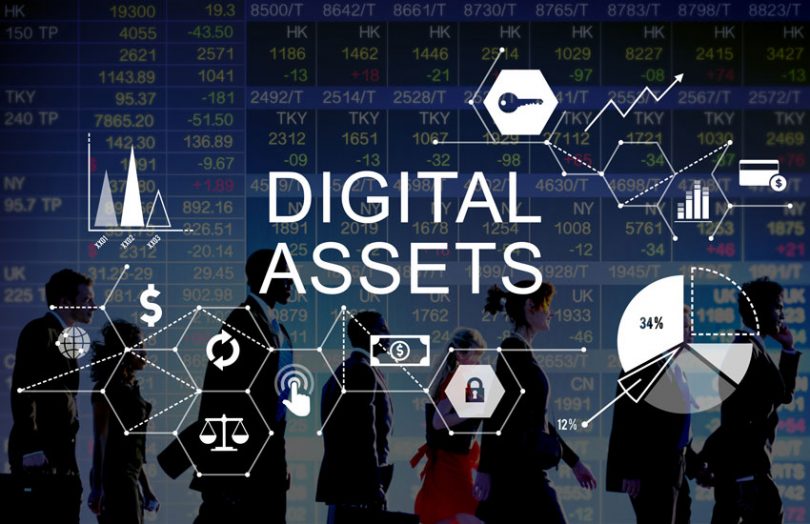
The question arises, what exactly consists of digital assets? The government has defined digital assets as any information or code or number or token (not being Indian currency or foreign currency), generated through cryptographic means or otherwise, by whatever name called, providing a digital representation of value exchanged with or without consideration, with the promise or representation of having inherent value, or functions as a store of value or a unit of account including its use in any financial transaction or investment, but not limited to investment scheme; and can be transferred, stored or traded electronically. This is the definition as per the Finance Bill in the Parliament. It also classified Non-Fungible Tokens (NFTs) as virtual digital assets and they are subject to the same tax treatment as other crypto assets.
The good news is crypto won’t be banned in India. The intent to tax it means that outright banning cryptocurrencies is off the table. But 30%? I don’t know… seems like a lot.
Other than the 30% tax, crypto trading includes transaction charges, cess and surcharge. Trading in cryptocurrencies will become increasingly expensive and may discourage retail traders from trading. But at least they aren’t shutting it down. Data from WazirX, India’s largest cryptocurrency exchange, shows that Indian investors hold a total of $6.6 billion worth of investments in crypto (source: Fortune) ! But most of the country’s investors are short-term holders just looking to make a quick profit. The high tax rate wouldn’t make it as attractive for them anymore.

The government’s taxation proposal treats cryptocurrencies like a wild gamble. It’s being taxed the same way we treat winning from horse races, other bets or lotteries or speculative transactions. There is no distinction between short-term and long-term gains. Further, if you incur a loss, you can offset it against some other kinds of incomes.
The government still has to define a proper taxation framework with clear rules. Everyone’s just glad they didn’t ban crypto right now…
Digital Rupee

The finance minister also declared that the Reserve Bank of India (RBI) will launch a digital currency in 2022-23. The central bank has indicated in the past that they are working on a phased-roll out of a central bank digital currency (CBDC).
India’s CBDC could very well be a retail-facing one instead of just one that’s running on the backend of banks. Nirmala Sitharaman also said in her speech, that the launch of digital currency will bring in cheaper and more efficient currency management.
India might be keen to introduce their CBDC because of an international movement for digital currencies. Last year, China became the first country to roll out its digital Yuan. Visa has been the exclusive electronic-payments provider at Olympic games. However, at this year’s Winter Olympics in Beijing, Visa has to share the spotlight with China’s digital currency. On the day of the opening ceremony, more transactions were made in China’s CBDC than through Visa!
Healthcare

Unlike last year’s budget, healthcare didn’t receive much attention. This time the budget focused on strengthening the administrative aspects of healthcare. For example, the government intends to set up an open platform called the “National Digital Health Ecosystem.” The aim of this platform is to make available all sorts of information about healthcare providers, facilities, treatments etc. at one place.
They also plan on introducing the National Tele Mental Health program. Mental health is a topic that isn’t addresses nearly enough. And the pandemic hasn’t exactly positively impacted people’s mental health. So the government wants to set up 23 tele mental health centres to address some of those problems and provide assistance to people suffering from mental health issues. It will provide 24×7 free counselling and care to people.
The budget allocated for healthcare is ₹86,200.65 crore, which is up 16.59% compared to the previous year. However that’s hardly an increase with inflation being almost 10%. They still have a long way to go when it comes to healthcare expenditure.
Education

The education sector has suffered during the pandemic. Schools and educational institution are the first to shut down and the last to open. The dropout rates have increased and students in remote areas faced challenges because not everyone has access to devices and a stable internet connection. The government finally recognised this and addressed it. They want to invest more resources in imparting supplementary education in regional languages.
For this, they will expand the One Class One TV Channel initiative under the PM e-vidya scheme to 200 channels from the existing 20. Further, they will set up 750 new virtual labs in science and mathematics departments to foster creativity. The government also wants to focus on improving the resources available for teachers. They want to create high quality e-content for teachers teaching virtually.
The expansion of the PM e-vidya scheme should help bridge the existing education divide in tier 2 and tier 3 cities. The focus on imparting education in regional languages will help students from different parts of the country to associate better with what they are being taught in school. All of this will, however, only be useful if it is targeted correctly. Hopefully, the students will be able to reap the benefits of these initiatives.
Go green!

The government announced a few steps to reduce carbon emissions and head towards a green economy. They plan on borrowing money using green bonds.
They’re just like any other bonds but they will be used to mobilise resources for green or climate-friendly infrastructure. The money from these bonds will be deployed in public sector that help in reducing the carbon intensity of the economy. These bonds will serve as an indicator of the country’s seriousness in pursuing climate action. India will join a select group of countries, primarily European, who have issued such bonds.
The FM also said that they will be allotting an additional ₹19,500 crore for Production Linked Incentive for manufacture of high efficiency solar modules. This is to facilitate domestic manufacturing for implementation of 280 GW of installed solar capacity by 2030.
If we are heading towards a green economy, we need to take care of vehicular emission. The solution is electric vehicles!
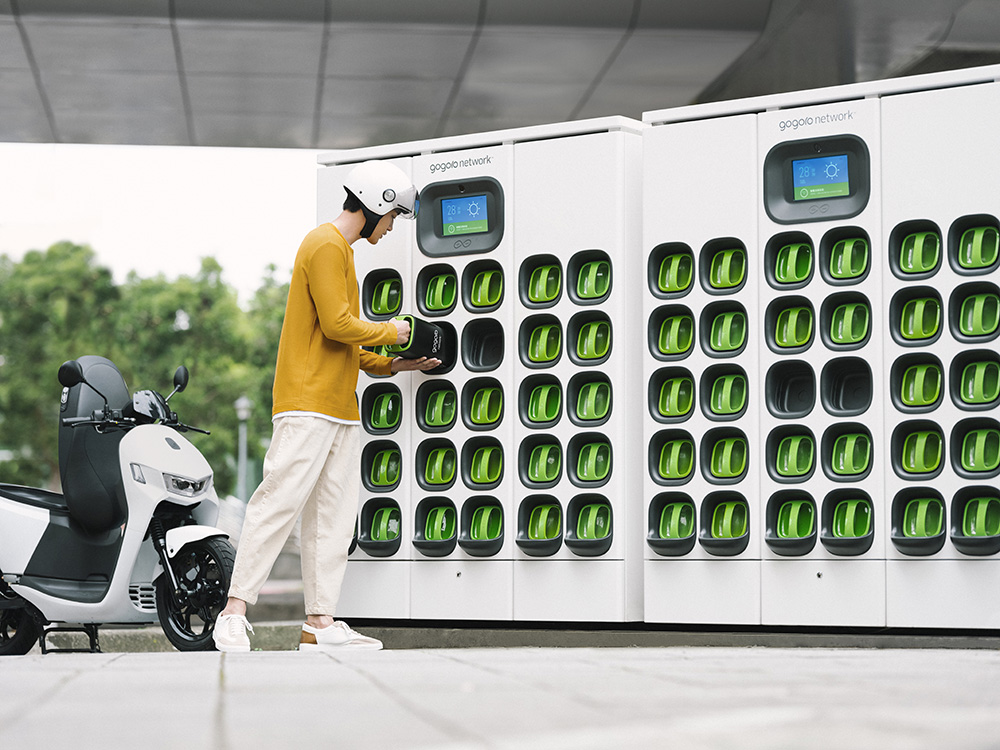

When it comes to EVs, people are apprehensive about is the range. They don’t want themselves to be stranded in the middle of nowhere because the battery ran out of charge. We need quick and effective solutions here. You could have battery charging stations everywhere but it’ll take a longgg time to install a proper network of charging stations. But battery swapping promises instant charge! Considering the constraint of space in urban areas for setting up charging stations at a scale, battery swapping is a more effective policy.
Special mobility zones or E-zones will be introduced in order to promote EVs. These zones are likely to be created in over-crowded areas like Connaught Place or Sarojini Nagar in Delhi. The idea is that only EVs or equivalent vehicles will be allowed to ply.
There weren’t a lot of exciting new announcements for the automotive sector but these are a few steps in the right direction. However, whether these will be effective or not, depends on their implementation.
People were a little upset about less money for food, fertilizer and petroleum subsidies. Also, there were high expectations for agriculture and allied activities, but the budget didn’t really match the expectations. Basically, everyone had mixed opinions about the budget. What were yours?





 The Echo-nomist
Leave a reply to EV fires – The Echo-nomist Cancel reply