

Last year we faced enough shortages to do a recap stories just on the shortages faced. From the looks of it, 2022 is headed in a similar direction…
The demand for raw materials in the paint industries soared over the pandemic as quarantined consumers took to DIY projects and home renovation to get rid of their boredom. But the supply couldn’t keep up. There were also a lot of other factors at play.
Sales at paint and wallpaper stores in the U.S spiked 7.8% annually in June, 2021 to $1.34 billion. Whoa! Since then, the pace of sales has definitely slowed down but is nevertheless robust. For example, the sales total for November is $1.1 billion (source: Fred economic data).
Sherwin-Williams and PPG, two of the largest paint companies in America, have talked about their impairing ability to manufacture their products because of the worsening supply chain shortages.
Paint is one of the most widely used industrial raw product with a complex chain, which illustrates just how deep this crisis is. Almost every sector needs and uses pain- from aerospace, construction and electronics to cars. It is also used for applications in the semiconductor, marine, medical, military, pharmaceutical and textile industry.

The raw materials used to manufacture paint are: Resins/Latex, Pigments, Containers, Solvents, Additives. Resins and Latex account for the largest cost in paint manufacturing. The pressure on cost for pain manufacturers has been made worse because of the diversity of formulas, requiring thousands of raw material inputs, almost all of which have risen in price. Additives have been worse hit. They’re the vital “salt and pepper” ingredients in paint!
One of the reasons for high price of paint is the excess demand. The other reason production costs are being affected are supply chain disruptions. Seriously, it’s getting old now. Shipping bottlenecks, truck driver shortage and power shortages in China have added to these disruptions.
Raw material prices were up by 20% in 2021 and 30% this quarter, forcing companies to raise their product prices. More and more workers are calling in sick due to coronavirus which means fewer workers on the production site. There was also an uproar about labour laws and increasing the wages of workers. Both of these have contributed to higher cost of labour. The transportation has been disrupted because of truck shortages and traffic jams in the sea. Inflation rates accelerated to a four decade high of 7.5%.

To make matters worse, the weather conditions were far from ideal in Texas and Louisiana. Texas was faced with low temperatures and snow in Feb’21, a very rare occurrence. They aren’t equipped to handle such weather conditions which is why there was no electricity and the water was dirty. Then in late August, Hurricane Ida hit in Louisiana. As a result, production slowed down at petrochemical plants that produce the raw ingredients for paint.
The demand for paint was expected to fall because of the slowdown in car manufacturing due to the chip crisis. However, quite the opposite happened. The demand for paint shot up aided by home projects and other industries. So much so that the company couldn’t supply as much as required by the consumers, leading to a shortage!
The prices of raw materials increased slowly but steadily, until it was too much for the firm to bear themselves. It was reducing their profit margins. So they shared the burden on rising cost of raw materials with the consumers by increasing the price of their product. Sharing is caring, right?
The paint companies have relatively more flexibility in fixing the prices of paint. It’s required by many industries like automobile and they can’t make do without it. Even if the prices of paint rise, they can’t cut back much on paint. When it comes to individual consumers, paint isn’t something you buy everyday. That’s why most consumers don’t feel a shock when the price of paint rise. They might have to increase their prices further in order to maintain their profit margin.

Other businesses have also been affected by this shortage. There are certain businesses where the prices are decided before hand. For example, in the marine coating businesses, the price to paint a superyacht is agreed with shipyards about two years in advance. This increases pressure on the company because they are unable to pass on the cost to the consumer. Other sectors such as insurance have also been stung as they are dealing with the rising cost of raw material to repaint cars involved in accidents. According to David Creswell, CEO of trade group Auto Body Professionals Club, painting compromises almost quarter of the cost to repair a car. (source: FT)
The number of cars repaired per year has also gone up because of the semiconductor shortage, which has created a deficit of new vehicles. Expensive new cars, booming second-hand car industry, long wait time for new cars are making people spend more on increasing the life of their old car. This has led to more cars being repaired for maintenance purposes and after accidents, thus forcing prices up further.
Paint companies will make it out of this with higher revenues. However, the challenge will be maintaining or increasing their profit margin.
No flowers on Valentine’s Day? Blame the shortage…
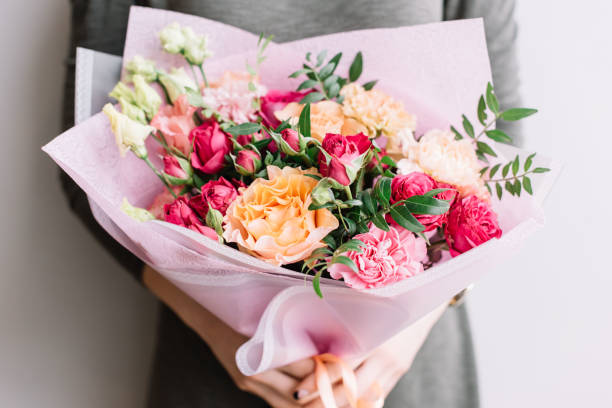
You might want to reconsider buying flowers for someone this Valentine’s Day. It’s going to cost you a lot more money than you anticipated. The world’s facing a flower shortage!
When the world went into lockdown in 2020, it was an uncertain time. Many flower farms’ crop was discarded. In order to avoid a glut, new crops weren’t planted as per schedule. More than 3,000 floral farms, about one third of the world’s farms, shut down between 2019-2021 (source: wkbw).
Now, the floral industry is facing pandemic-related supply chain issues, labour shortages and poor weather conditions in major growing areas. All of this has resulted in a global shortage of fresh flowers, especially the kind that are used in events like weddings.
In 2020, farmers planted fewer flowers and also changed the variety that they were planting. They switched from the kind used in events to the kinds sold at grocery stores. Because at the time, grocery store ones were more popular. Since then, farms have started planting event flowers, but it’s a slow process because they have to wait until what’s growing is harvested to plant new ones.

After demand fell in 2020, firms and wholesalers had to let go of employees. Other employees left their jobs, as a result of new pandemic induced lifestyle changes. The impact of this is being felt now as the industry deals with labour shortages.
Transportation of flowers from one place to another also unraveled. They’re experiencing weekly delays because of fewer truck drivers (truck driver shortage). There was also a decline in international flights, leaving less space on planes for imports. Since flowers are perishable items, this causes loss of product. The flowers could be stored in a cool container for days before it reaches the final location.
South America experienced colder than usual temperatures in 2021 along with a rainier growing season, which wasn’t ideal for crop yields of flowers like roses and carnation (think: weddings). California, the state with the most floral businesses, also faced droughts which poses a problem for the farmers in the state.
All of this has led to shortages and hence higher prices for domestic, as well as imported flowers. Roses that used to cost $1.5 per stem are now being sold for $3 a stem or more (source: NYTimes). So if you’re buying a dozen roses, it will cost you $18 extra! The cost of white flowers, very popular in weddings, has gone up as much as 50%.

This is why there might not be an adequate supply of flowers for Valentine’s Day. Even if you’re lucky enough to find a rose, be prepared to pay a high price.
Floral companies won’t be able to return to pre-pandemic production levels before 2023. This might cause a change in wedding plans for some people as more than double the amount of weddings are set to occur in 2022 than in 2021 and 2020. Some 2.5 million weddings are expected to take place in the United Stated this year alone (source: NYTimes). Couples will have to steer away from the traditional roses and white flowers and use other varieties of flowers that are actually available in the market and fits their budget.





 The Echo-nomist
Leave a reply to Russia-Ukraine: Global economy can feel the pain – The Echo-nomist Cancel reply